Toller & Daughters have been pouring bells into the same hole in the ground since 1687. Nine generations, one pit, 4,117 bells. Every one is still ringing somewhere, or we would have heard.
A bell is the only instrument that is cast, not built. There is one pour and it lasts four minutes. Whatever comes out of the ground will hang in a tower and be heard by people who are not born yet. We have done this 4,117 times. We still do not sleep the night before.
4,117bells cast
338years
9generations
1pit, never moved
Chapter I — The making
It takes four months, of which four minutes matter.
i. Loam
First we build the silence.
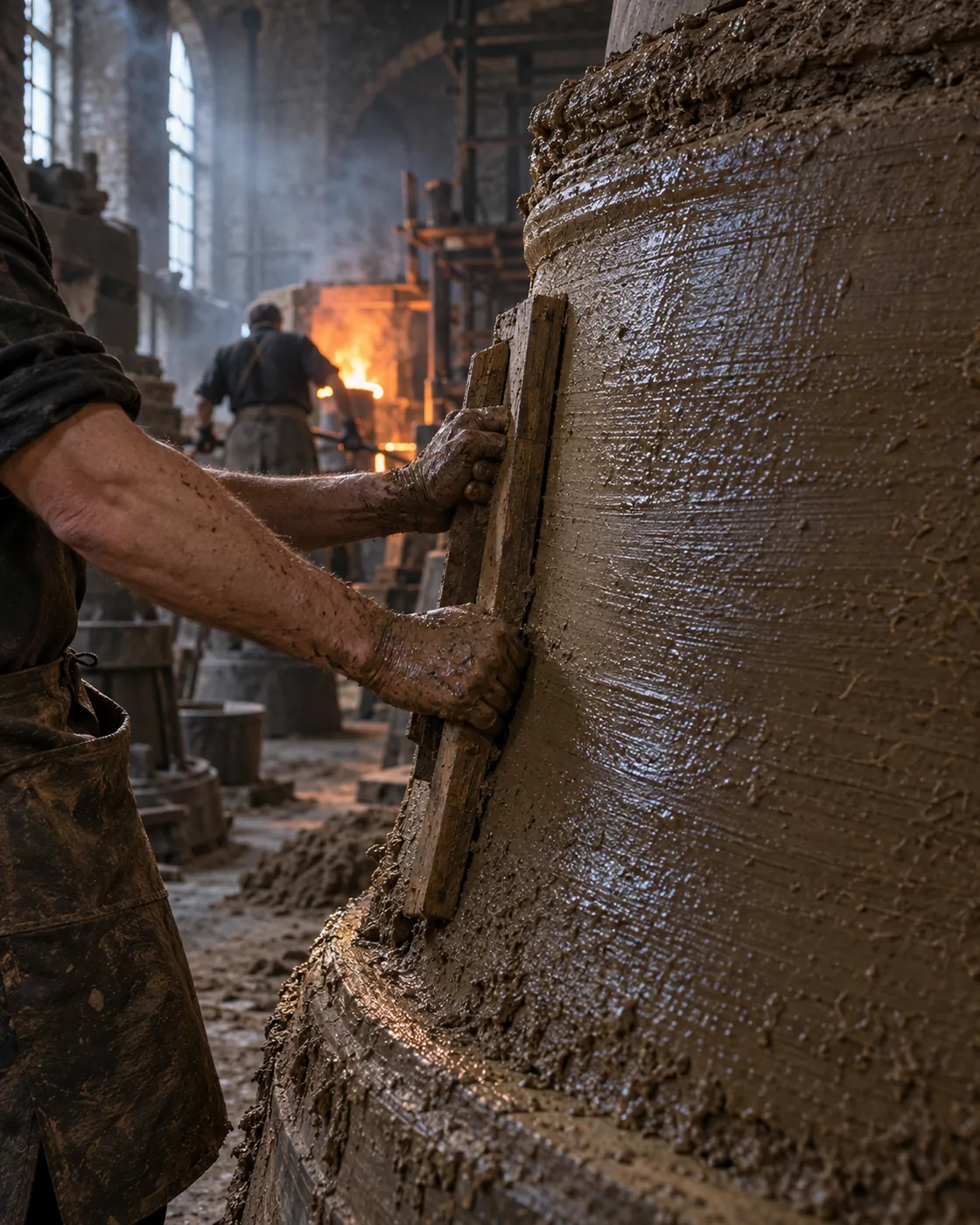
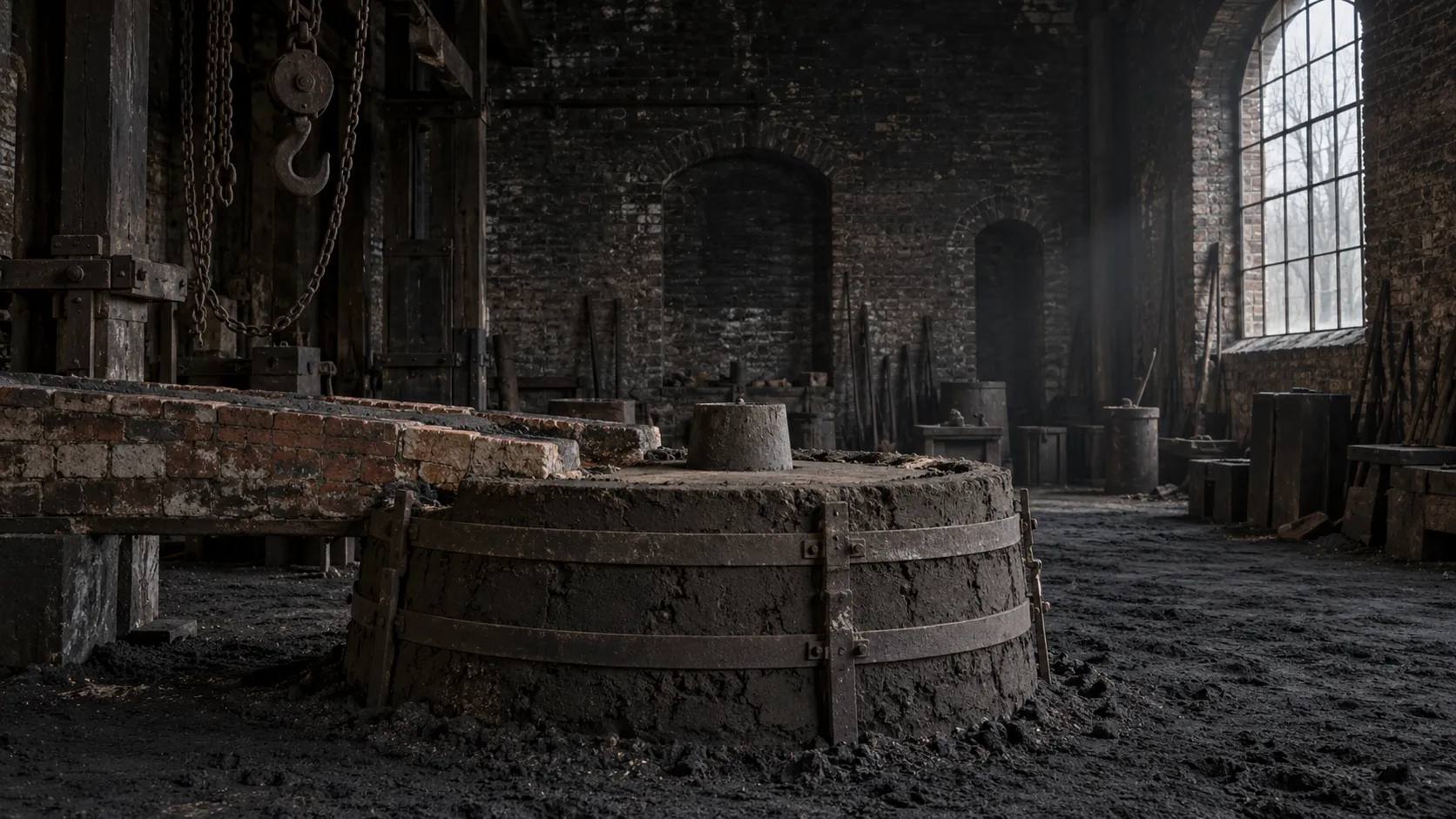
A bell begins as the space where a bell will be. We shape it twice in loam, which is clay, sand, horse manure and goat hair: an inner core, an outer cope, and between them a gap the exact shape of the sound. The recipe has not changed since 1687. Neither has the smell.
Strickling the cope. Three weeks of work, destroyed on purpose in week sixteen.
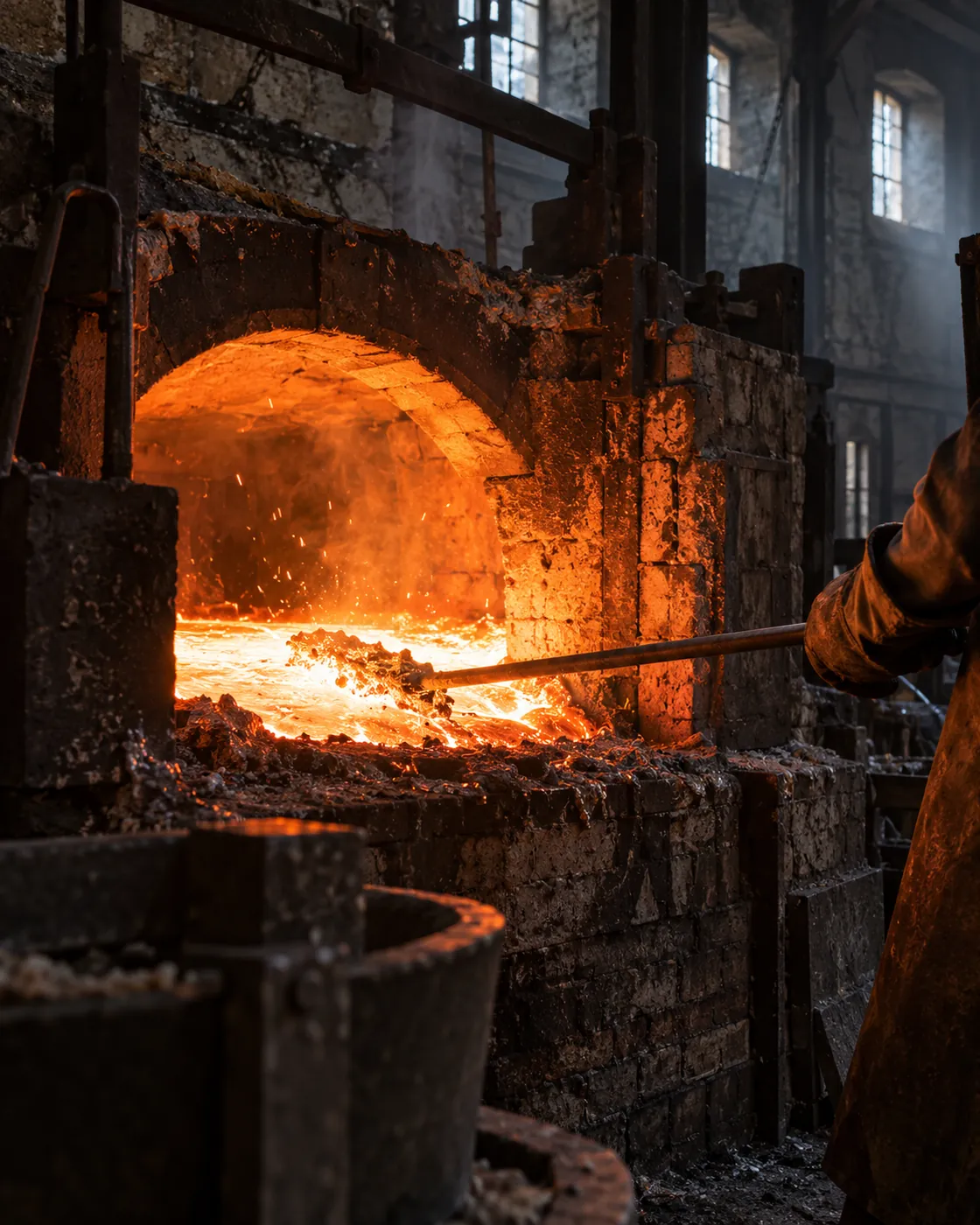
The furnace at 03:10. It is lit the evening before and watched all night.
ii. Fire
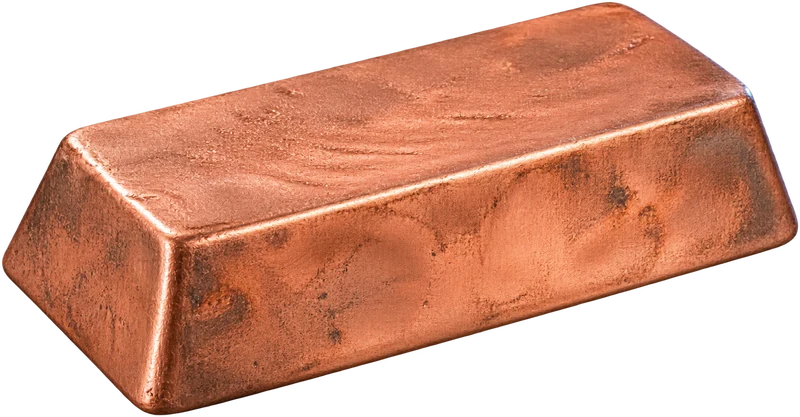
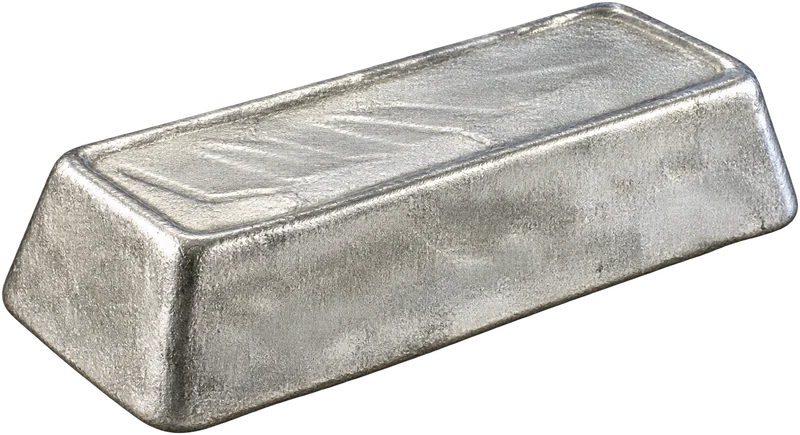
77:23CopperTin
Bronze so hard it is nearly glass.
More tin and it shatters. Less and it thuds. We melt four tonnes overnight at 1,150 °C and skim it with a willow pole, because willow is what Hester Toller used in 1790 and nobody has dared try anything else.
iii. The pour
06:40
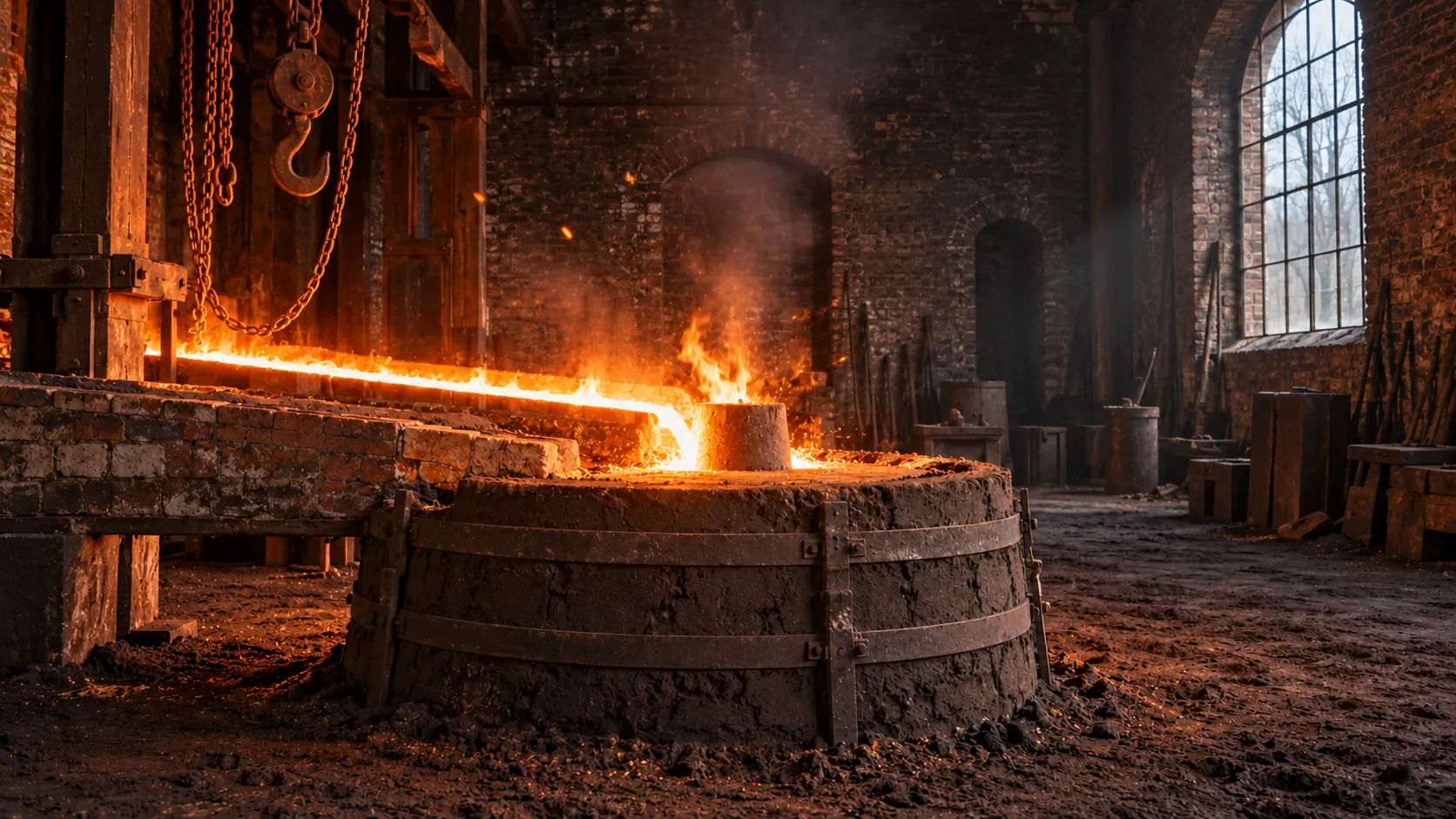
The pit is cold. Nobody talks.
Pour.
Four tonnes. Four minutes. There is no second attempt.
06:51
Then we fill in the hole and go home.
Pour time0:00Metal1,150 °C
iv. Patience
Nine days in the ground.
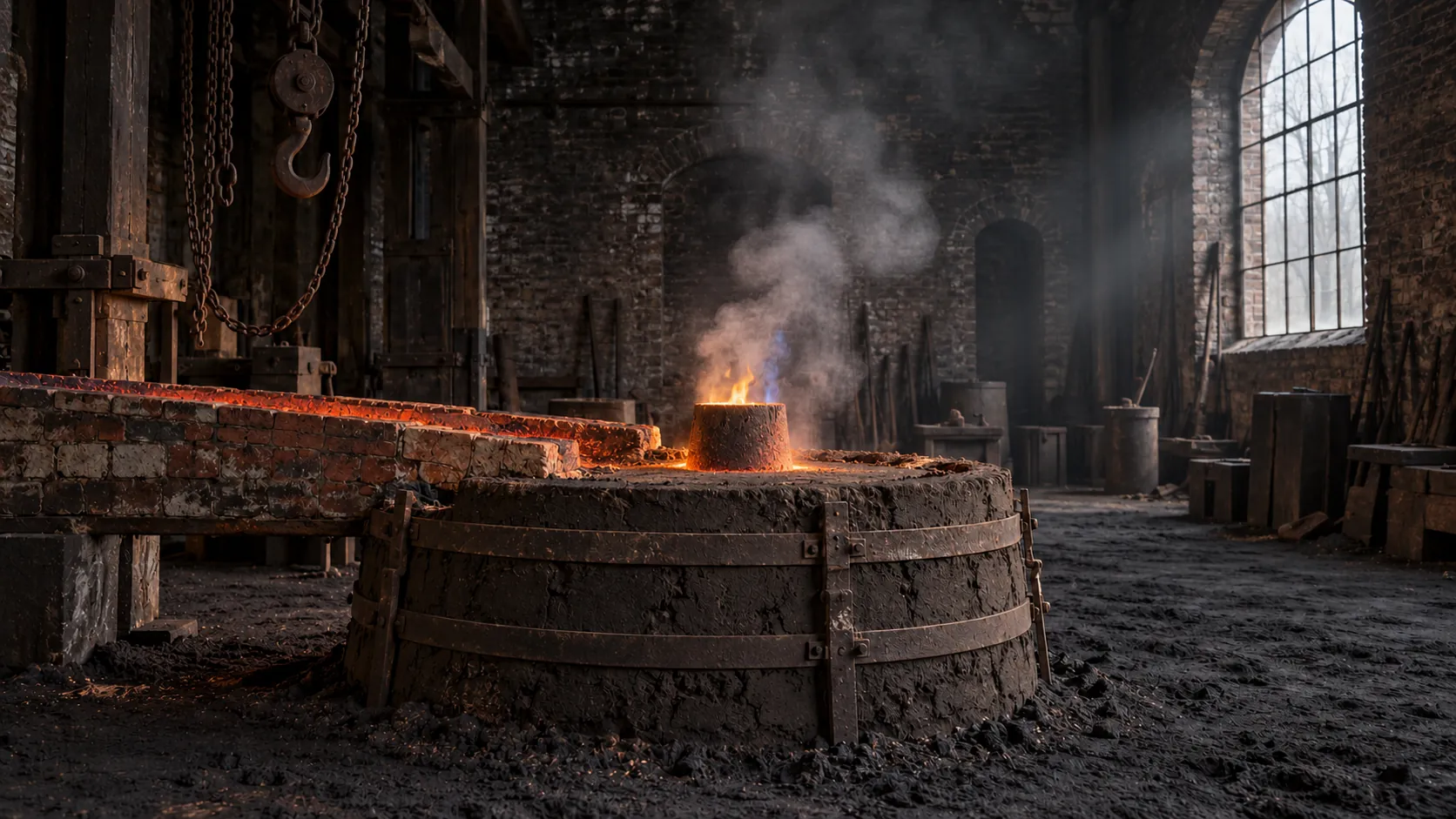
Cool a bell too quickly and it cracks the first time it is struck. So it stays buried in the pit, in its own heat, for nine days. We have tried being impatient. The result is in the yard, in two pieces, where the apprentices can see it.
1
2
3
4
5
6
7
8
9
Day nine. No. 4,117 meets daylight a semitone sharp, as intended.
Chapter II — The first four hundred years
Day9
Day40
Year80
Year400
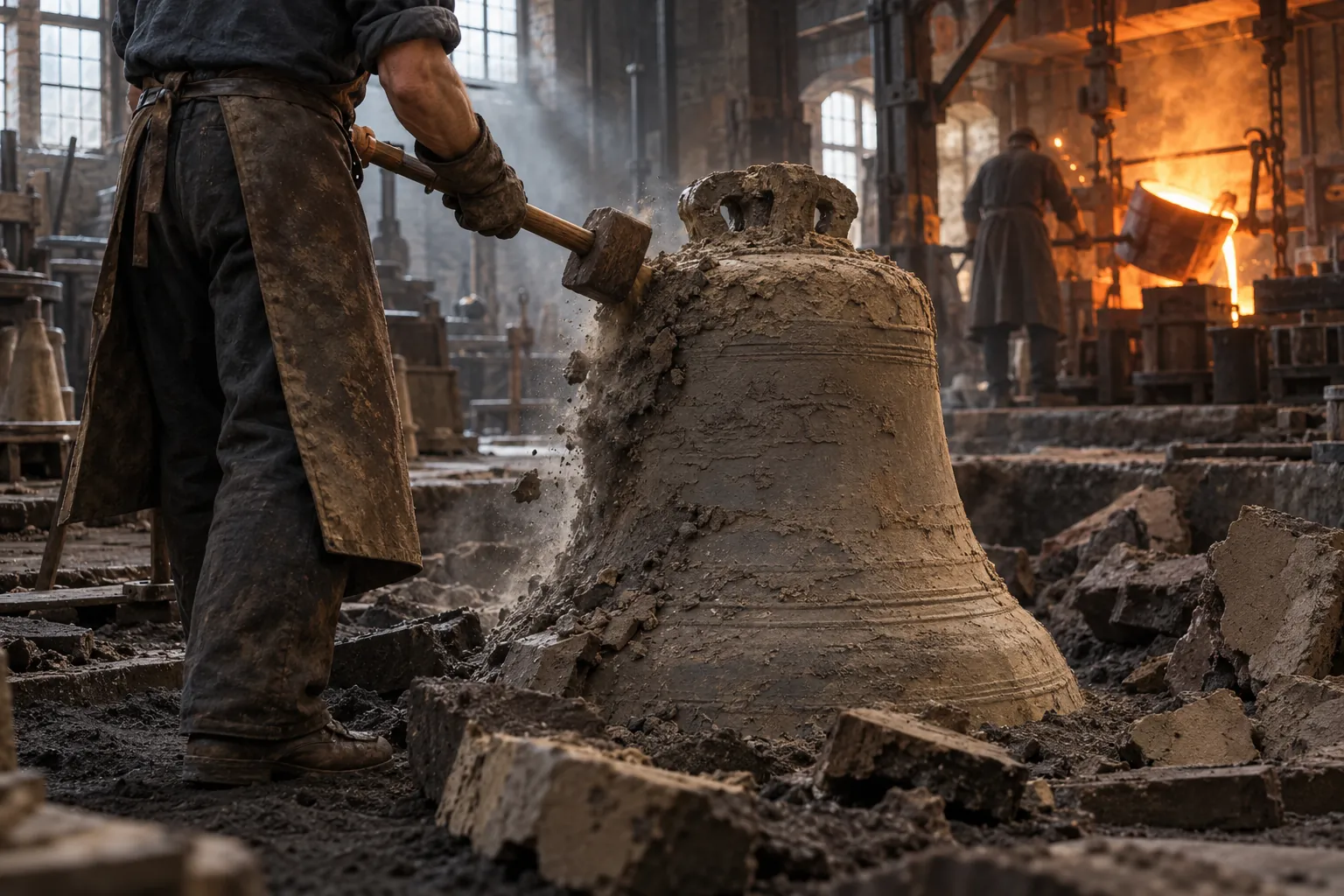
As cast
Rough, black and deliberately sharp. You can take metal off a bell. You cannot put it back.
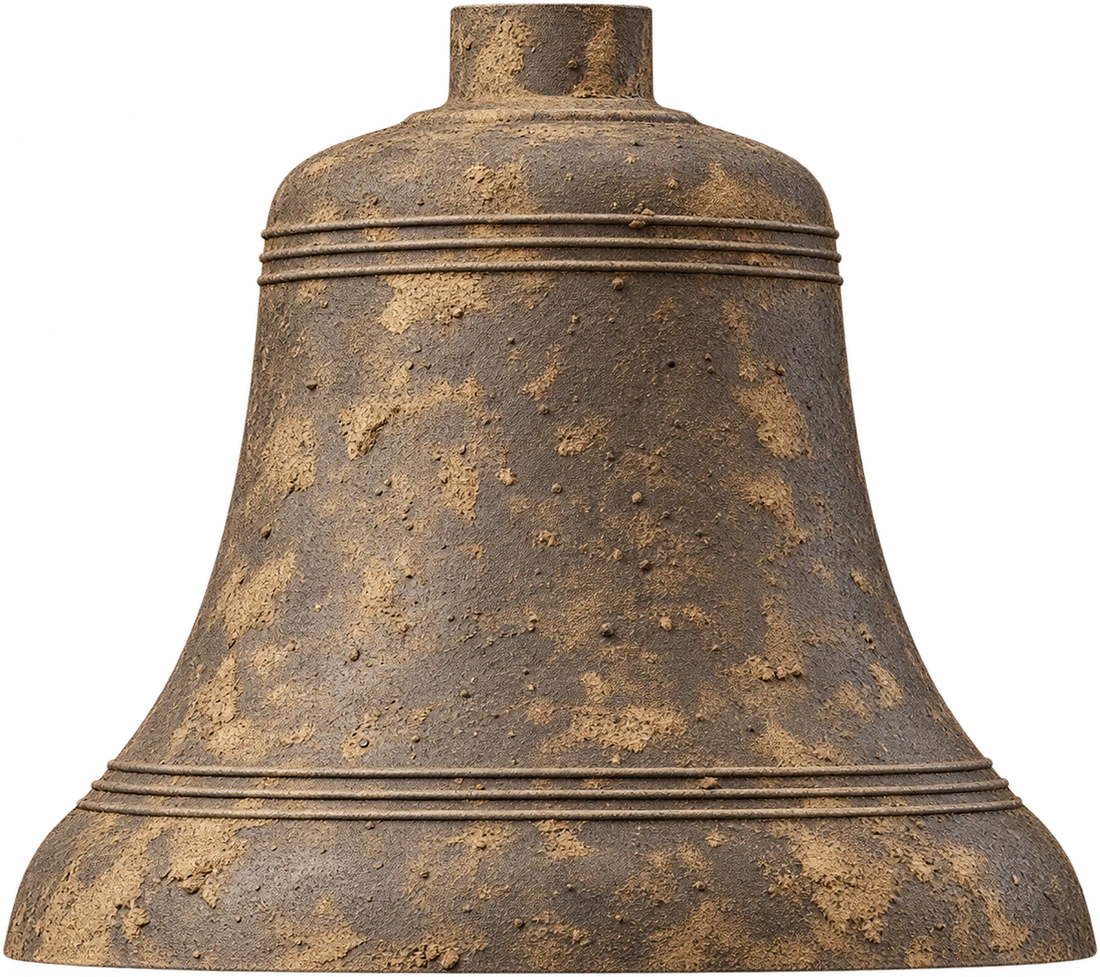
Tuned
Thirty-one kilos lighter. In tune with itself, and with the five it will hang beside.
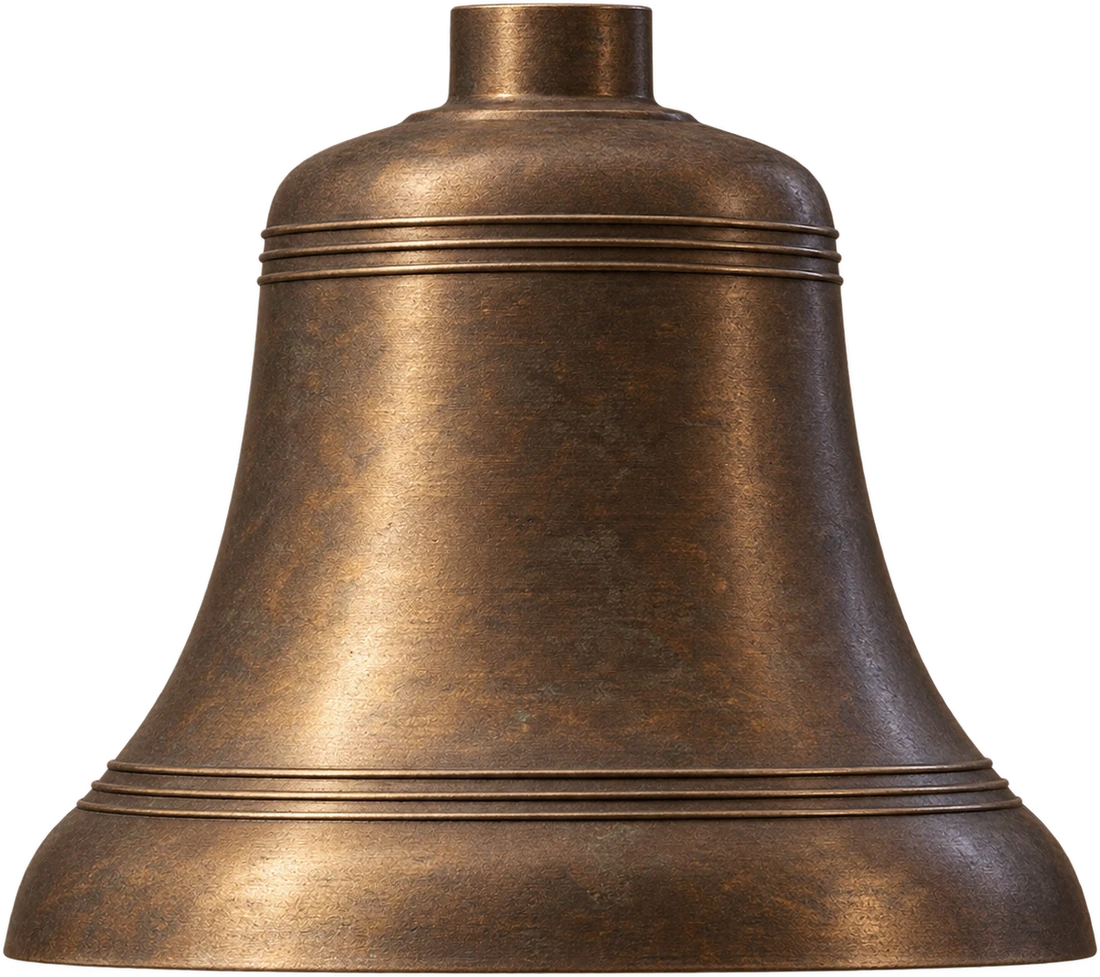
Brown
The founder who made it is gone. Nobody in the parish can picture the tower without it.
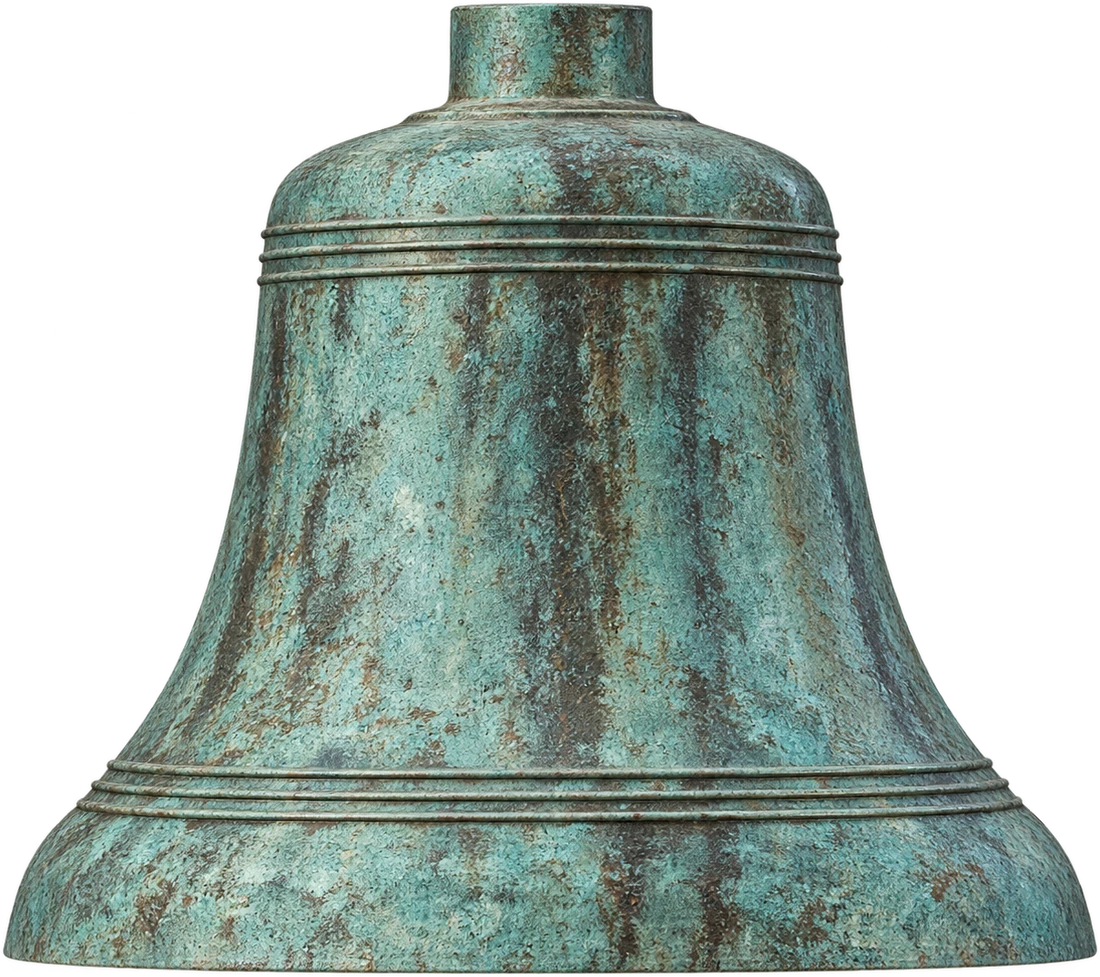
Green
Still within two cents of the note we left it on. We will not be available for comment.
Day 9Day 40Year 80Year 400
Chapter III — Tuning
One bell. Five notes.
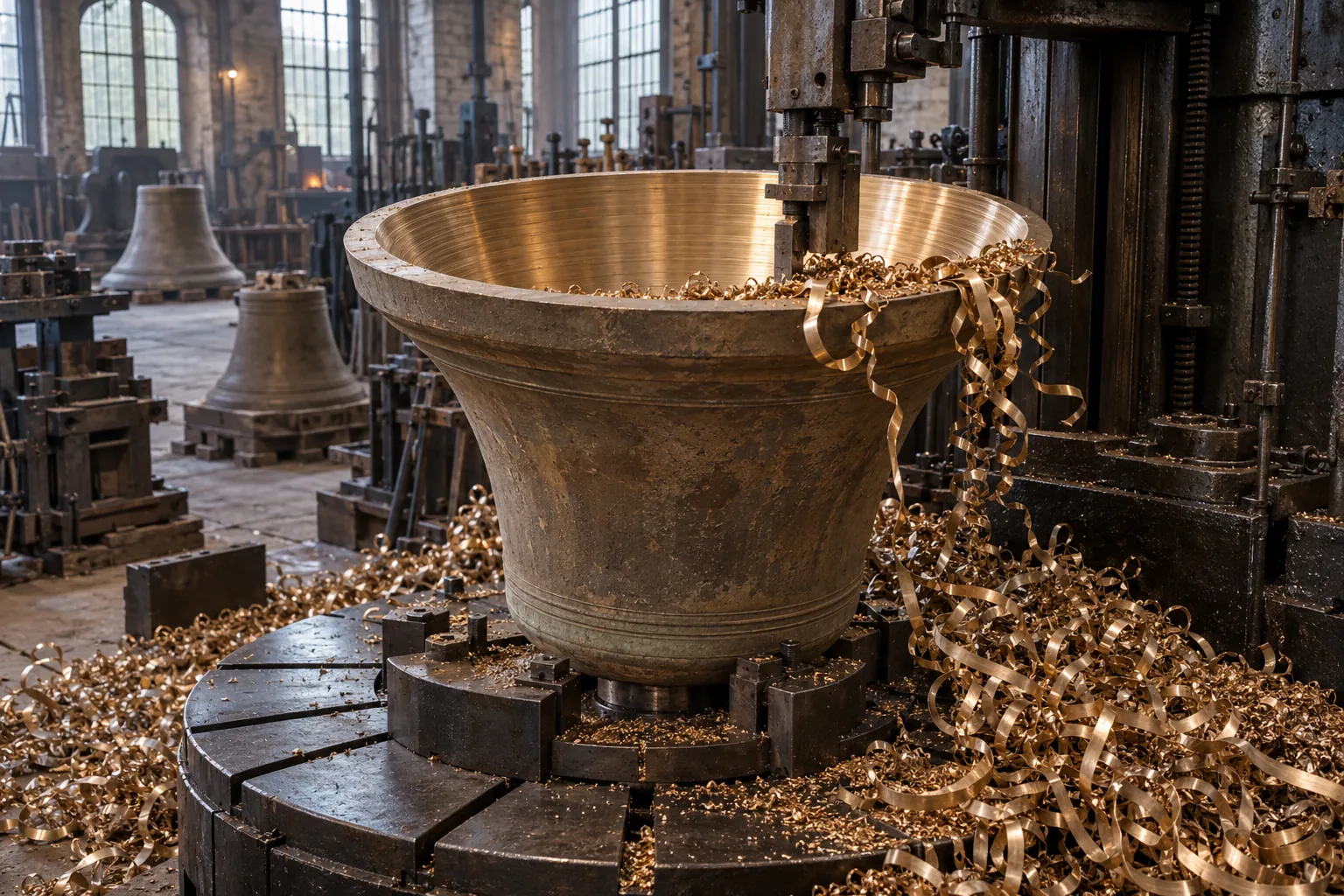
Strike a bell and you hear a chord, not a note. Five separate tones sound at once, and in an untuned bell they disagree. The tuner's whole job is to make them agree. She does it on a vertical lathe built in 1921, taking shavings off the inside a fraction of a millimetre at a time, and listening.
Section through No. 4,117. Each note lives in a different band of the wall.
Tap a note to hear it alone.
The 1921 lathe. It has outlasted four tuners.
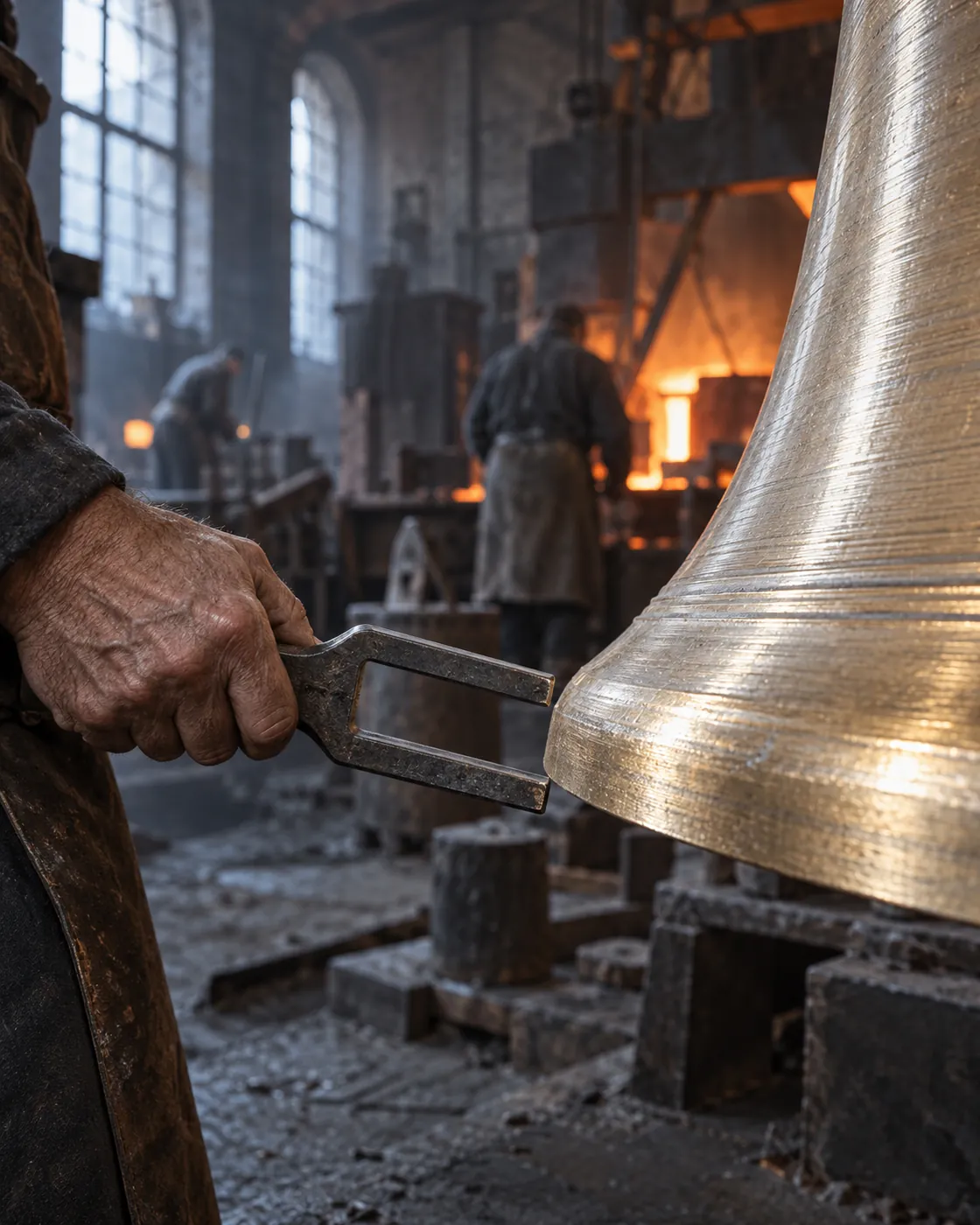
Checked by fork, then by ear. The ear has the final say.
Chapter IV — The ring
Ring the changes.
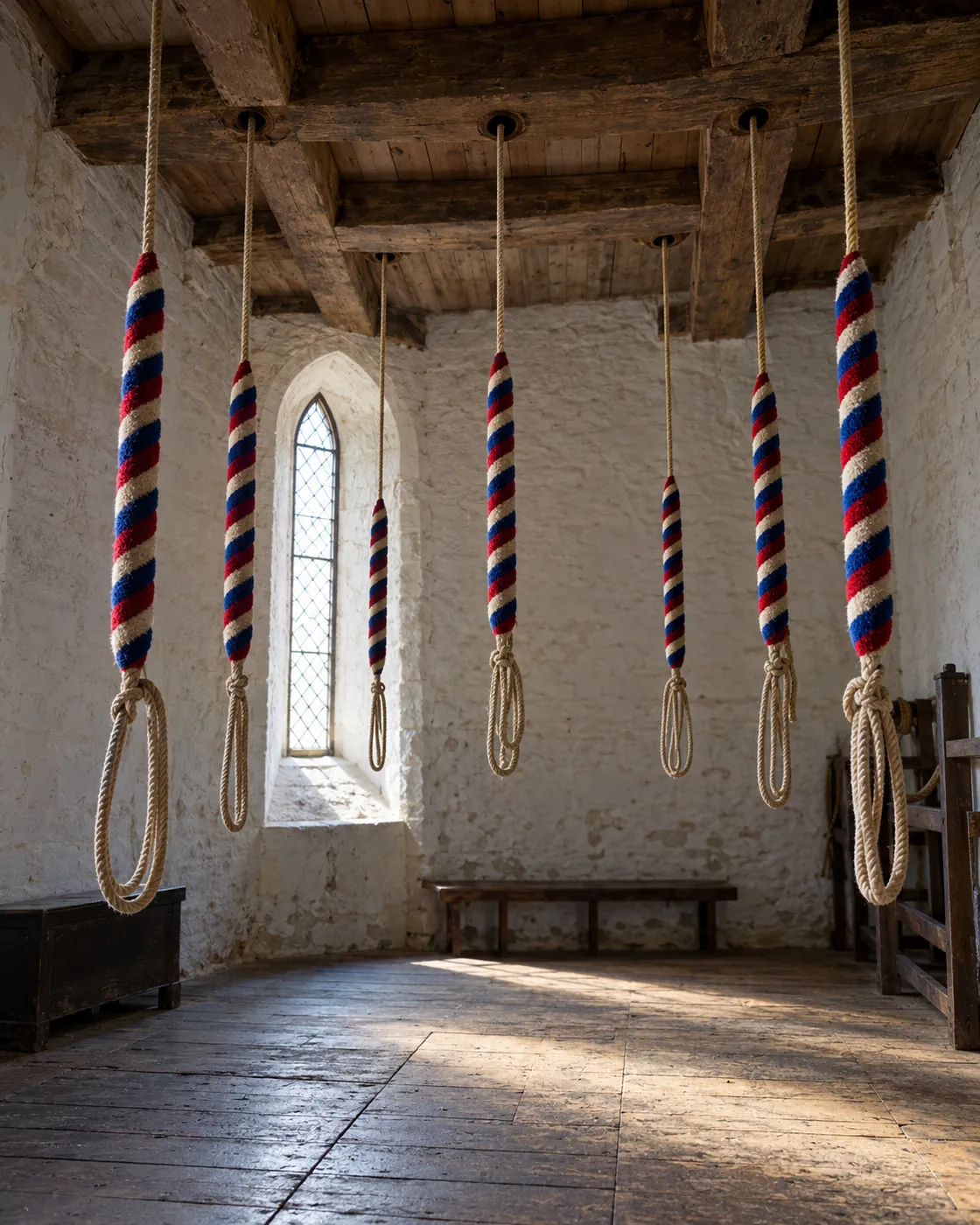
Hang six bells in a tower and the English will not play a tune on them. They will ring them in every possible order instead, by rule, from memory, never repeating a row. It is called change ringing. It is four centuries old, closer to mathematics than to music, and a full peal takes three hours without stopping.
The ringing chamber at St Osyth's, Marrowby. Our six, hung 1911.
Press 1–6, tap a bell, or let us ring for you.
Row 0 of 0
The treble, lightest of the sixThe blue line, which ringers learn by heart
Chapter V — What we cast
Five kinds of bell. One kind of metal.
And one exception, for the sea. Each is cast to order, tuned on the same lathe and numbered in the same ledger. Strike any of them.
Keep scrolling
01
The tower bell
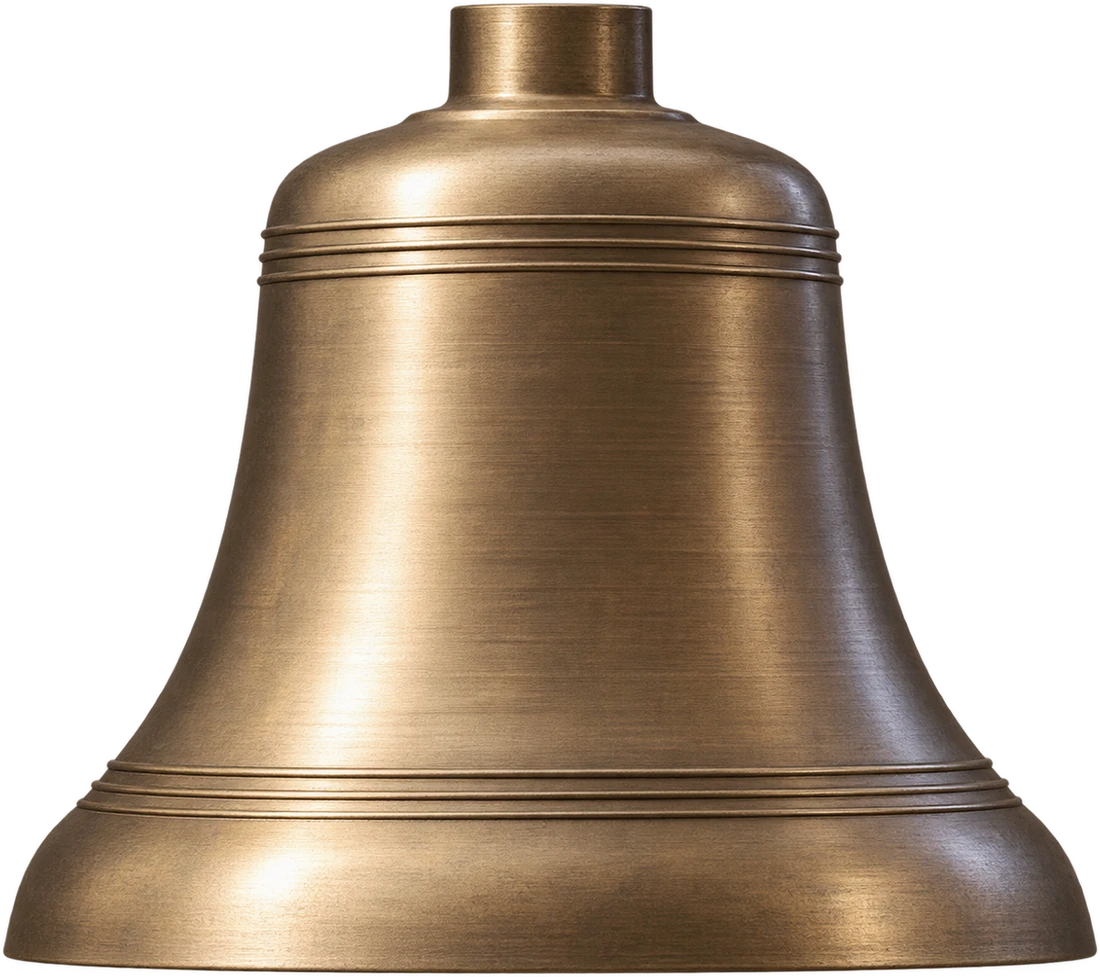
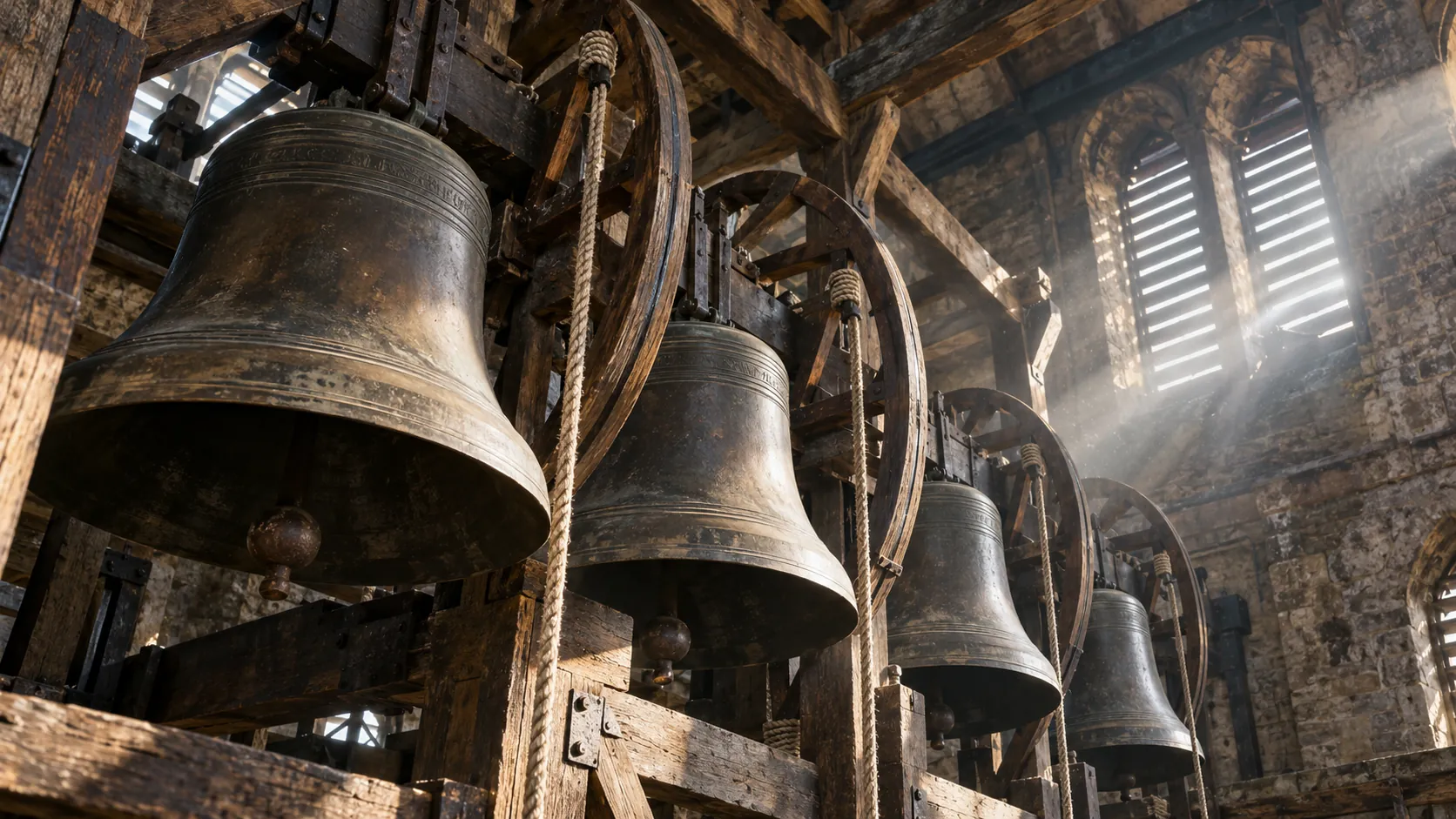
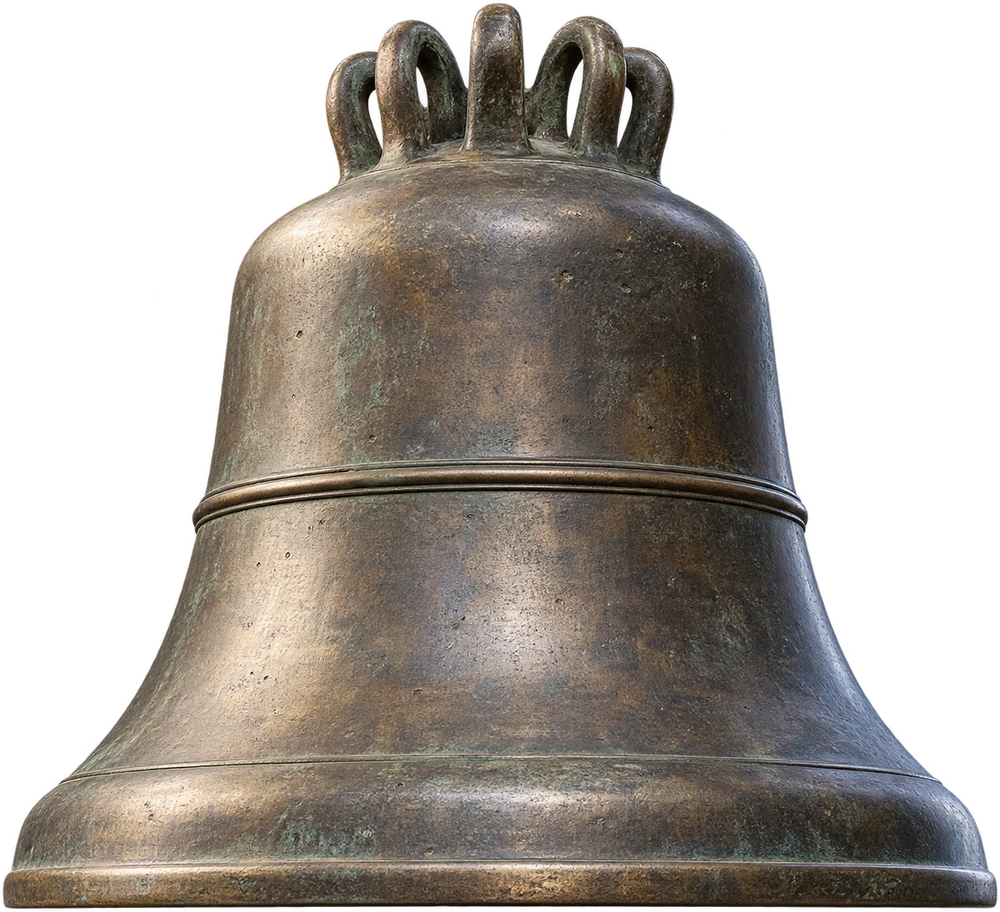
For churches, town halls and anyone with a tower and patient neighbours. Hung for full-circle ringing or fixed for a clock.
Weight
2 to 40 cwt
Shown
14 cwt · ⌀ 1,092 mm · F♯
Lead time
26 weeks
From
£9,400
02
The bourdon
The lowest voice in a cathedral. We cast one every decade or so, and the town comes to watch. Bring a strong floor.
Weight
3 to 9 tonnes
Shown
6,400 kg · ⌀ 2,140 mm · G
Lead time
14 months
From
On application
03
The handbell
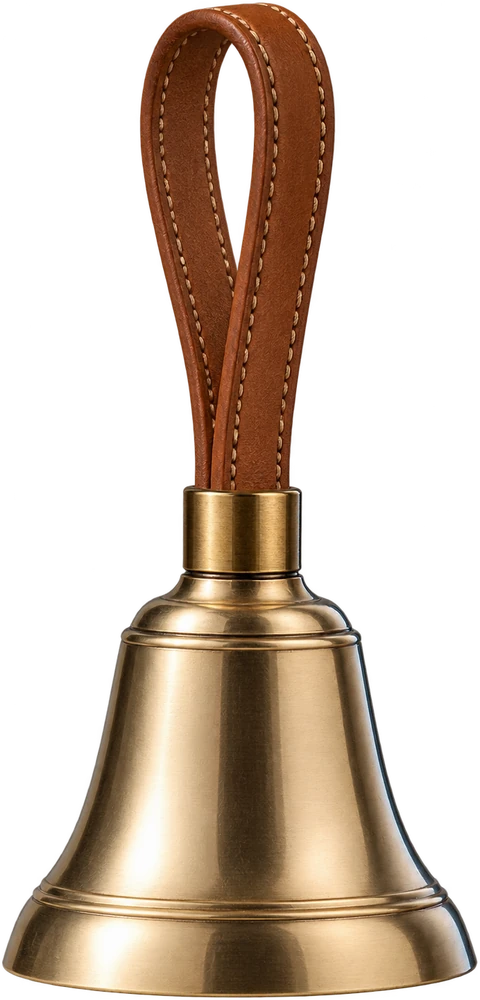
How ringers practise without waking the village. Sold singly, by the octave, or in a long set of sixty-one.
Weight
200 g to 7 kg
Shown
No. 15 · ⌀ 140 mm · G
Lead time
8 weeks
From
£410
04
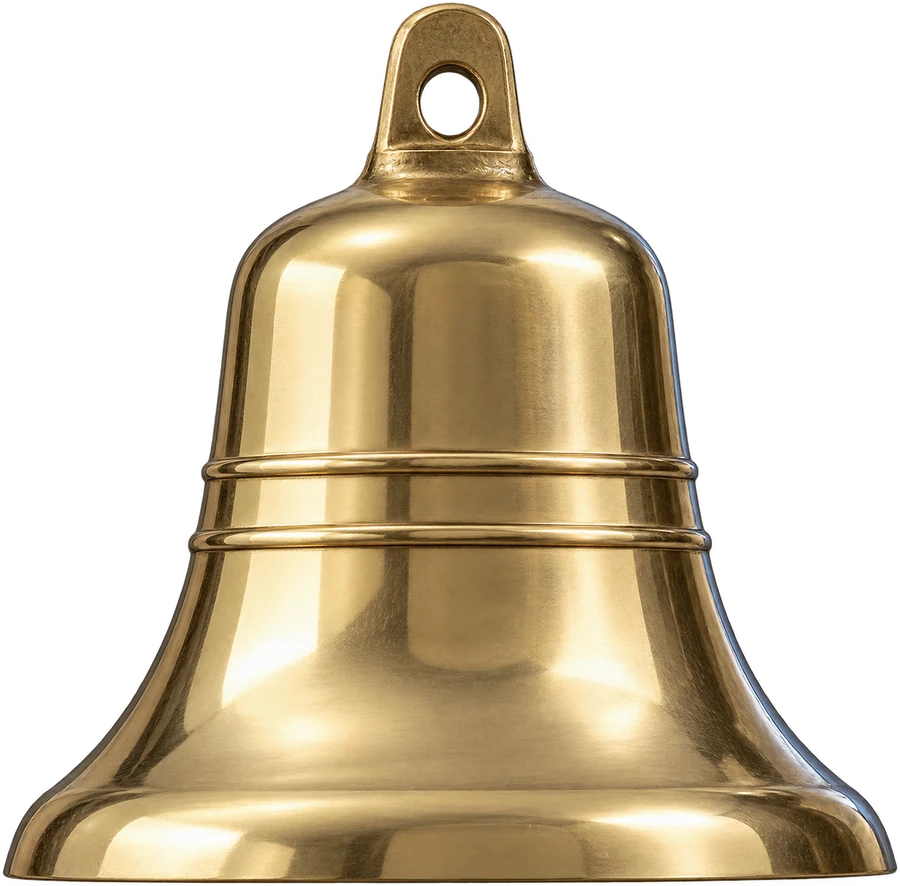
The ship's bell
Brass, strictly speaking, not bell metal. Salt air eats tin. It is the only exception we make, and we make it for the sea.
Weight
2 to 30 kg
Shown
4.2 kg · ⌀ 203 mm · D♯
Lead time
6 weeks
From
£690
05
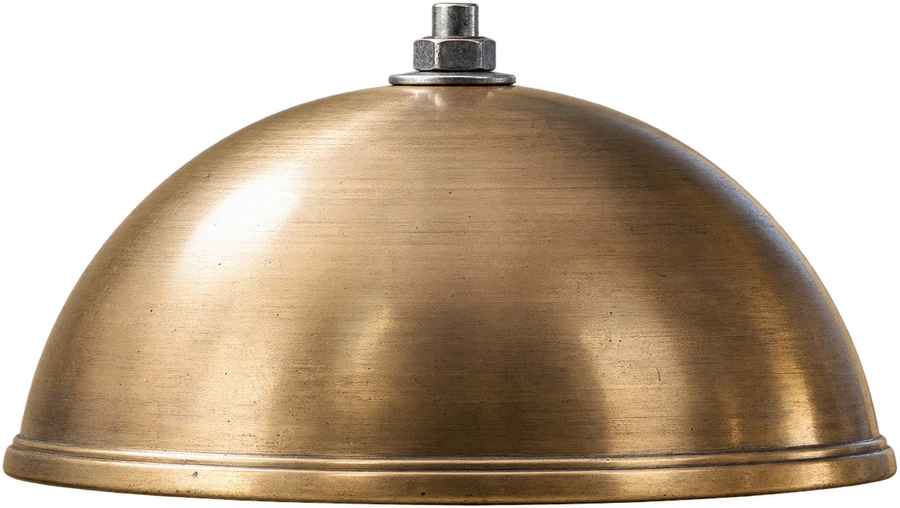
The clock bell
A hemisphere, struck from outside by a hammer, on the hour, every hour, for as long as anyone winds the clock.
Weight
10 to 400 kg
Shown
62 kg · ⌀ 510 mm · C
Lead time
12 weeks
From
£4,900
Chapter VI — Commission
What should yours say?
Every bell we cast carries an inscription, set by hand in reversed letters and pressed into the mould. Most are a name, a date and a reason. Type yours and see how it sits.