
Fri21:40 · the wait
We pour on Fridays, after dark. Dark, because you judge bronze by its colour. Friday, because a bell wants the weekend to cool.
Bringing the furnace up to pouring heat
This site rings. Bell tones are synthesised live in your browser, partial by partial. Nothing sounds until you say so.
We pour a sound on a Friday night, then wait three hundred years to find out if we were right. So far, mostly.
Pull the rope§The trade
A bell is the only instrument you cannot retune by turning a peg. You tune it by taking metal away, and metal does not go back. So we measure for a week, cut for an hour, and listen for the rest of our lives.
IFire
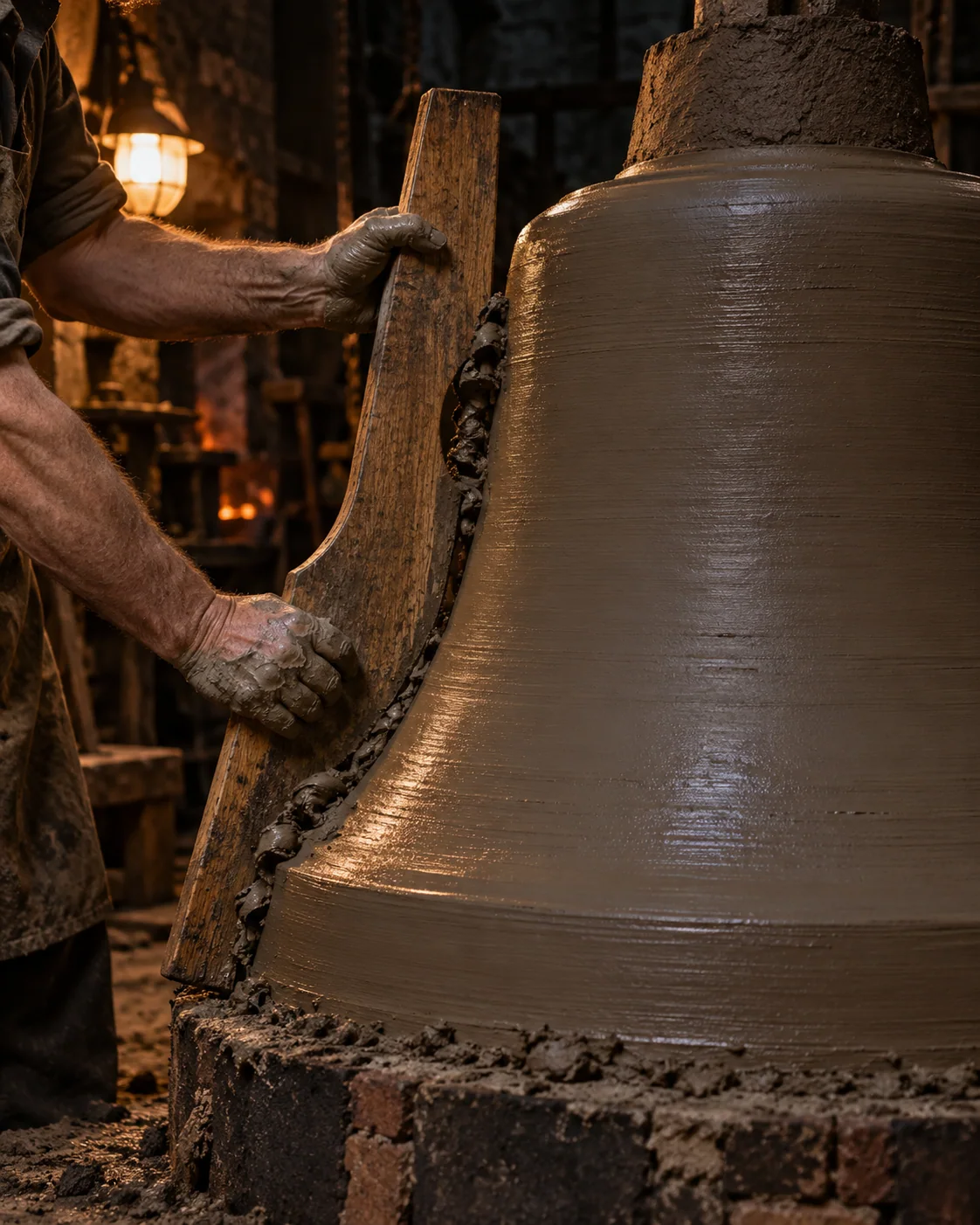
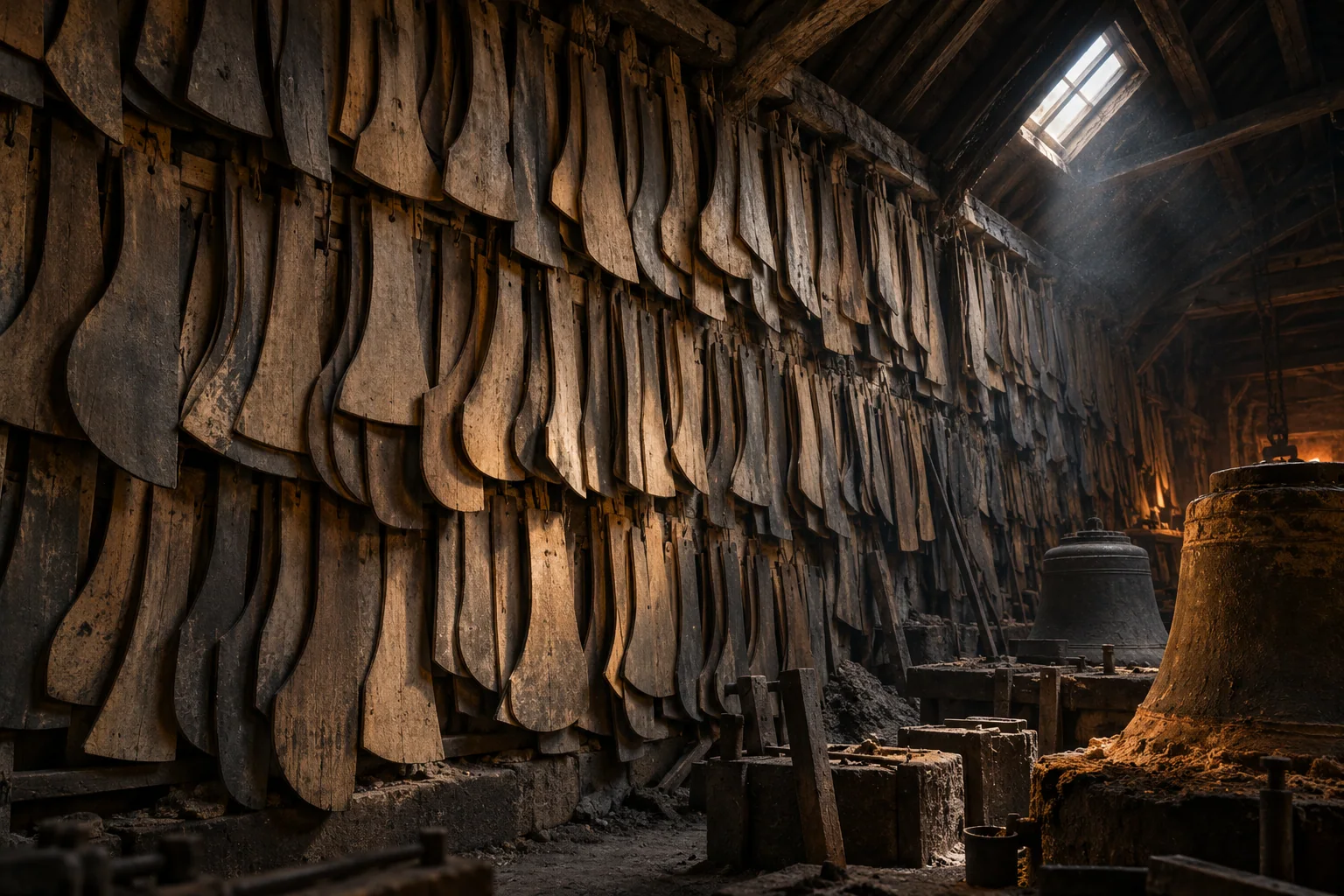
A bell mould is loam: sand, clay, horse manure and goat hair. We have tried modern things. The goat hair wins.
We sweep two shapes with a board cut to the bell’s profile, the inside and the outside, and bake them hard. The gap between them is the bell. Everything we know lives in the curve of that board; change it by the thickness of a fingernail and the note moves.
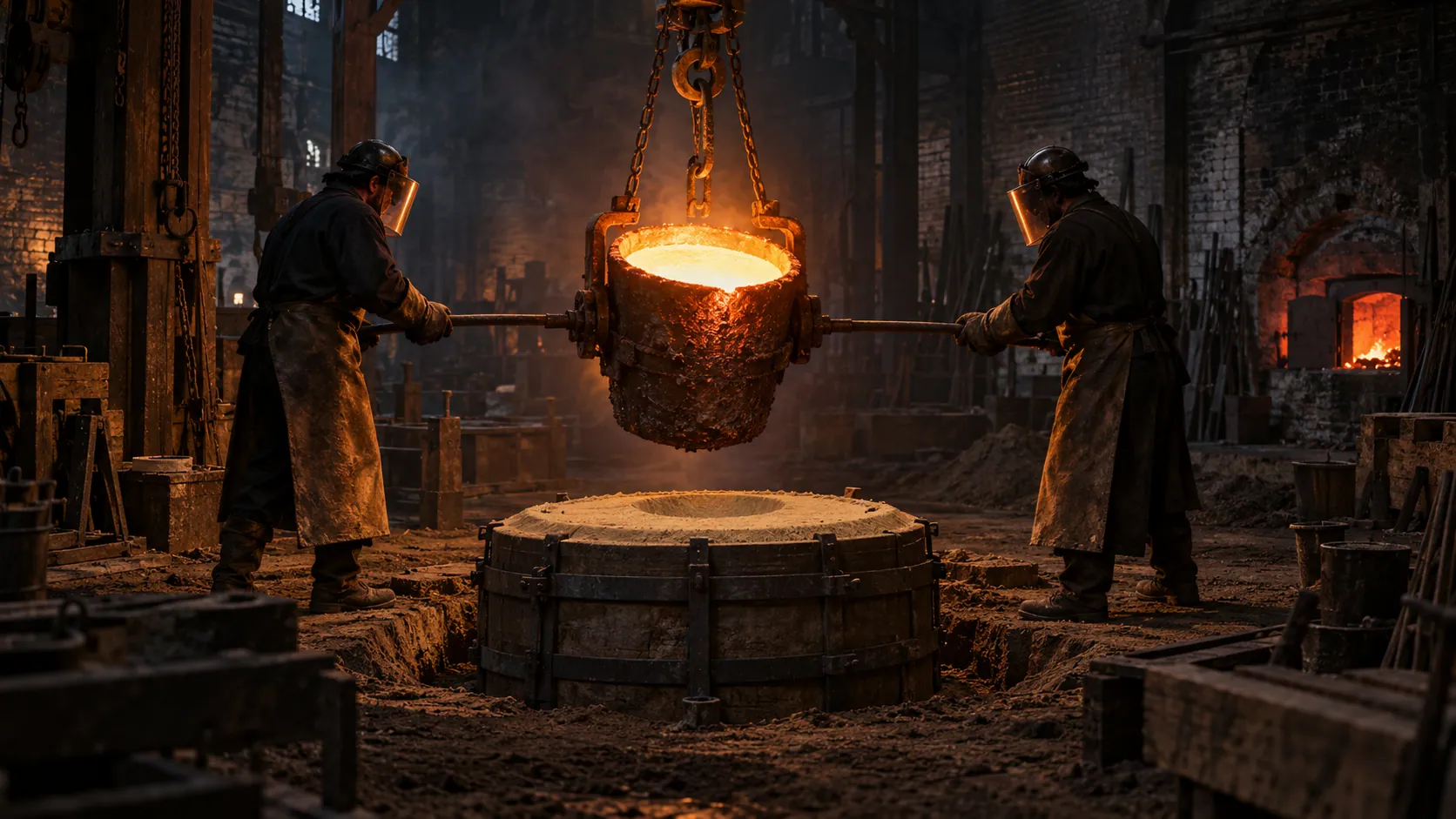

Fri21:40 · the wait
We pour on Fridays, after dark. Dark, because you judge bronze by its colour. Friday, because a bell wants the weekend to cool.
Fri21:52 · the pour
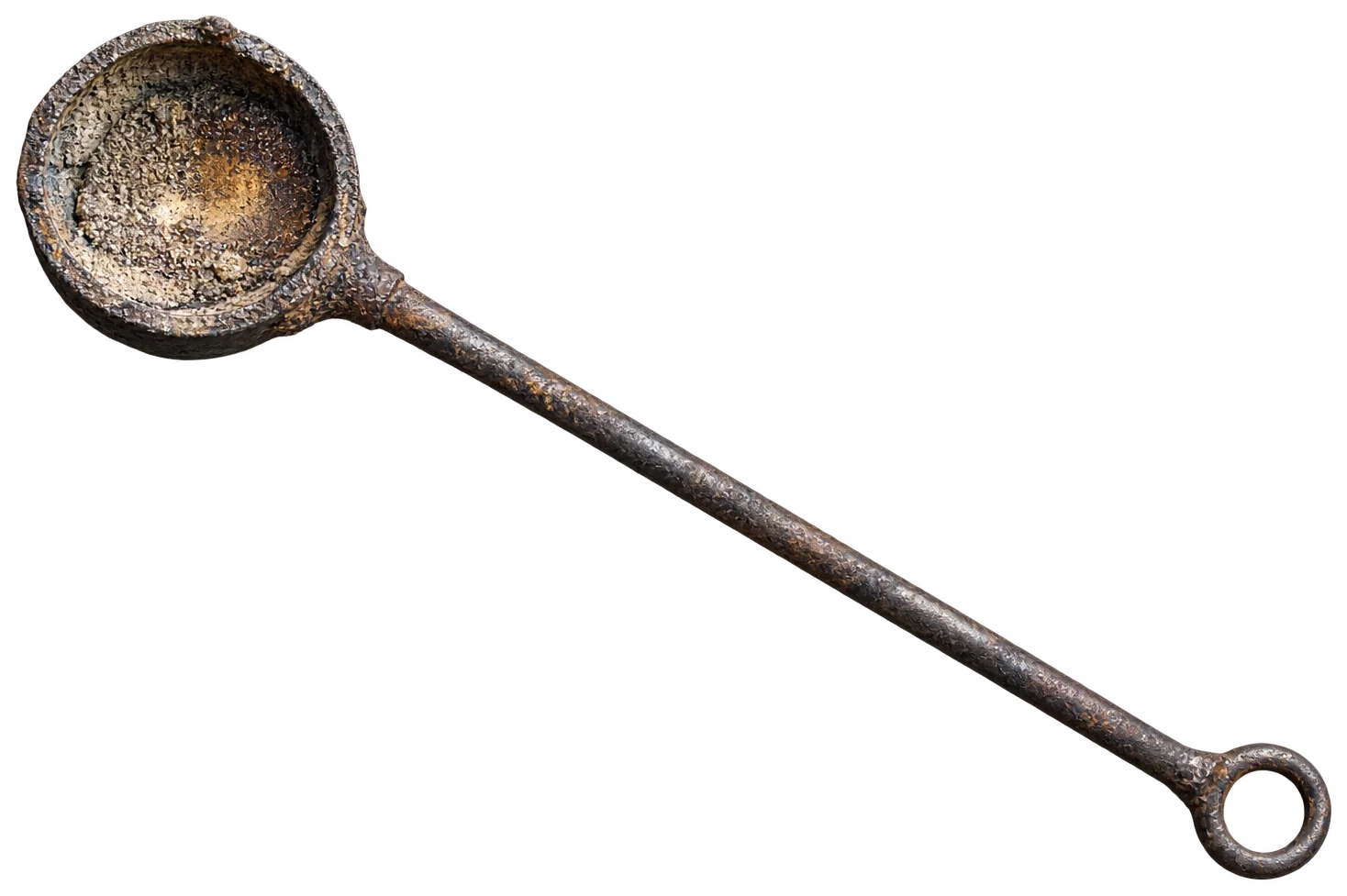
Four minutes. Nobody speaks. Seventy-eight parts copper to twenty-two of tin goes in at eleven hundred and fifty degrees, in one unbroken stream, or not at all.
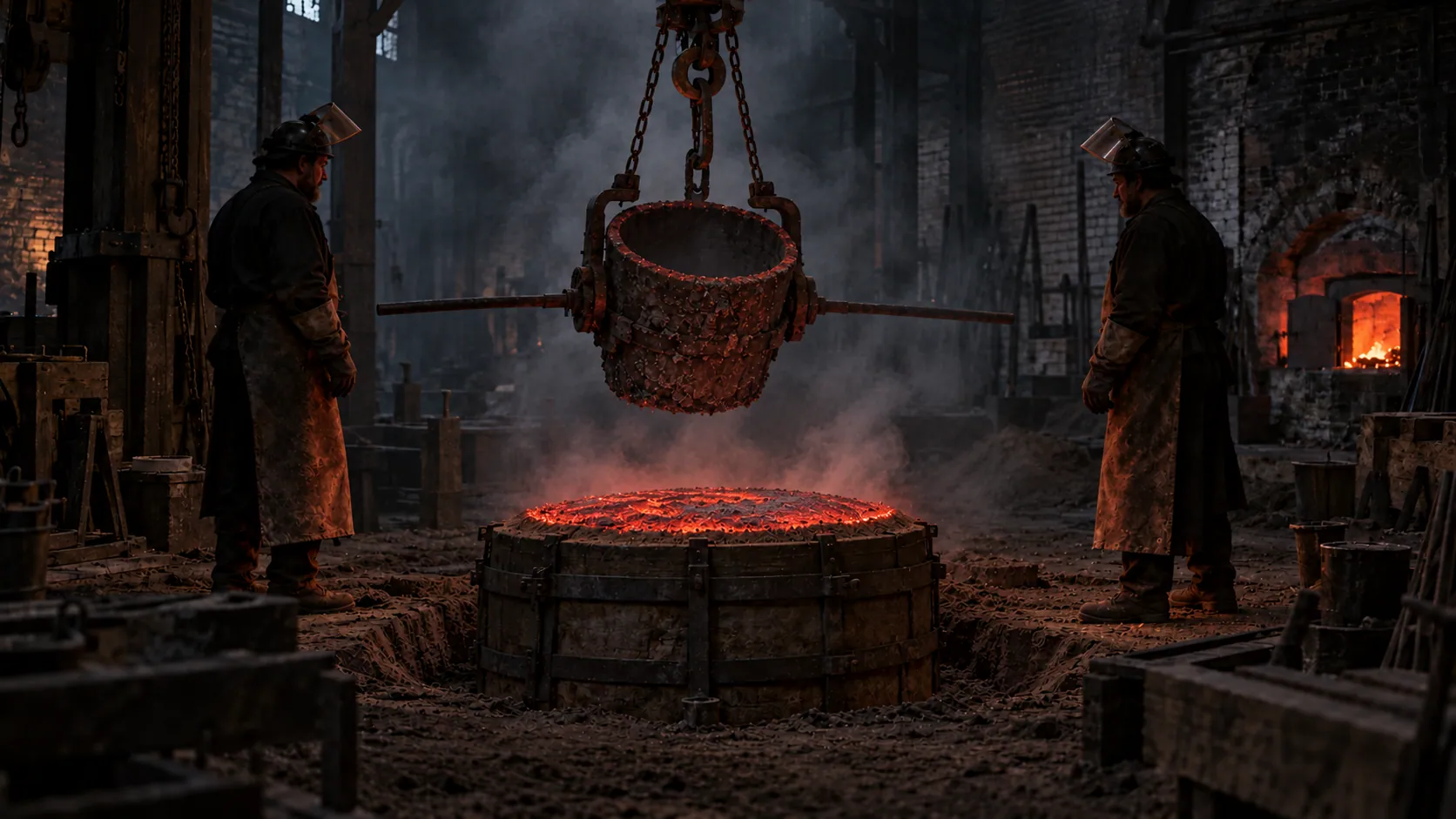
Fri22:06 · the quiet
Then we bury it and go to the pub. Nobody will know what we made until Monday. You get used to this. It takes about twenty years.

What comes out of the ground is black, ugly, and a little sharp of the note we want. That is on purpose. You can lower a bell’s voice by cutting. Nobody has ever found a way to raise one.

“I have poured four hundred and six bells and I have been certain about none of them. The day you are certain, you stop looking at the colour.”
T.T.Master founder, 41 years in
IIIVoice
Strike a bell and you hear a chord: five partials, stacked. Out of the mould they disagree. Tuning is the business of bringing them into line by shaving the inside wall, a different band for each, on a lathe older than anyone who works it.
Looking up the mouth. Each bright ring is where a partial was brought in.
As cast: five partials, five opinions.
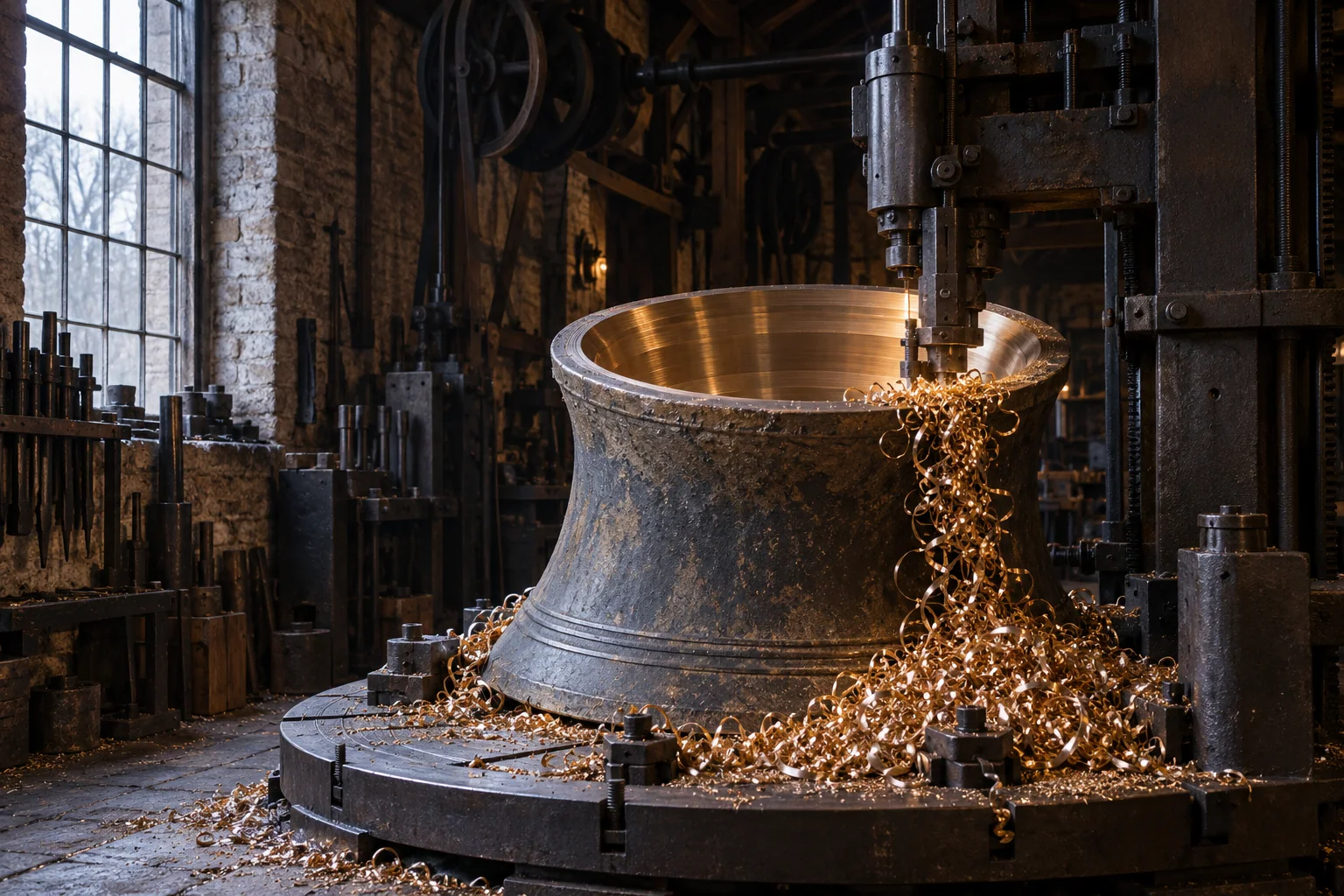
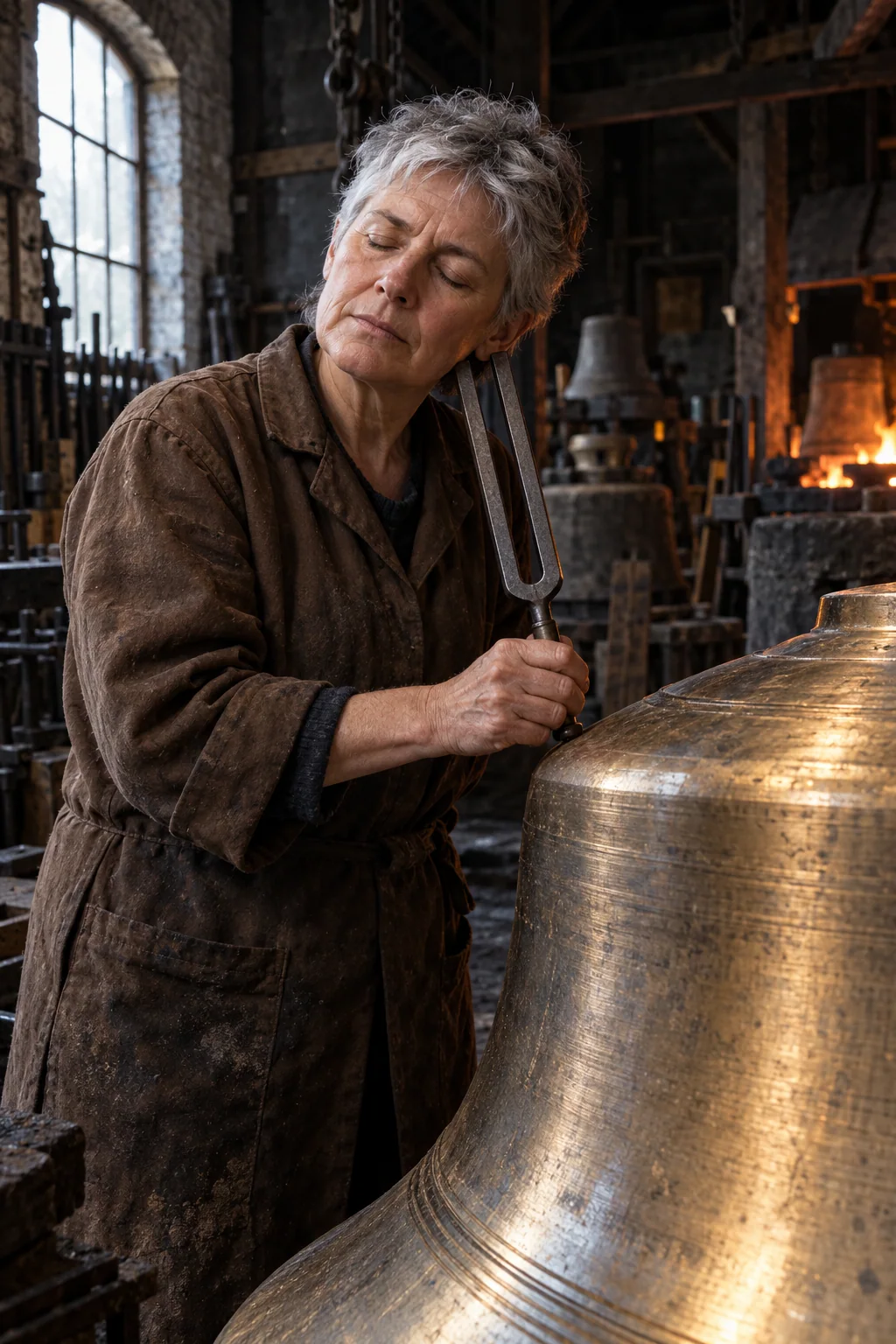
“You stop when it stops arguing with itself. Cut once more after that and you have made a very handsome garden ornament.”
IVThe ring
England’s oddest music has no tune, only arithmetic. Six ringers, six ropes, and the bells swap places one pair at a time, never repeating a row, until every order has been rung. This is the first sixty changes of Plain Bob Minor. Follow the orange line; that is the path one bell takes through the others.

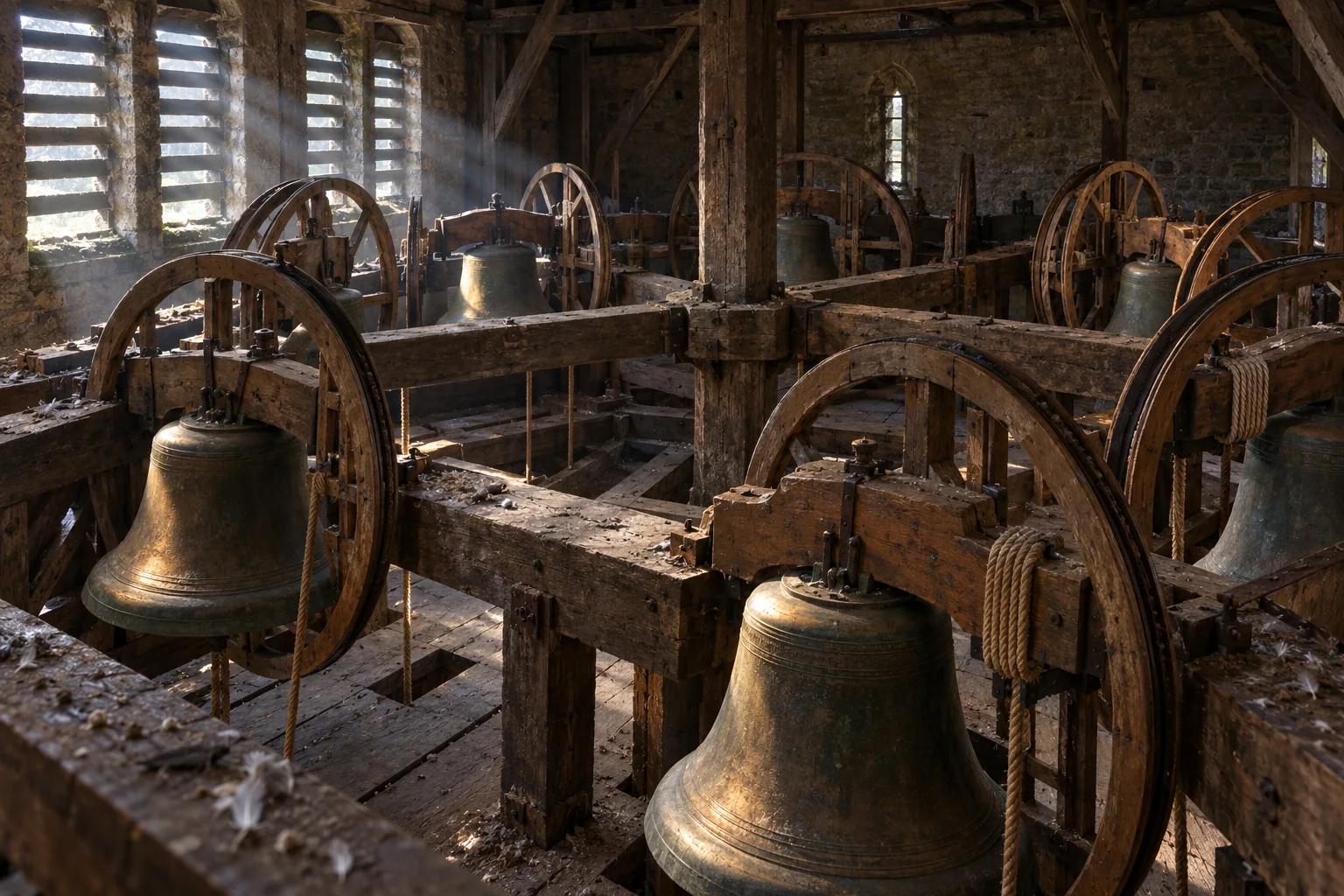
A full extent on six bells takes about twenty-five minutes and cannot be written down while you ring it. On eight bells, it takes a day. On twelve, somewhat longer than the universe has so far been open.
VOut there
A bell’s working life starts the day it goes out of the door. We get about nine months with each one. The parish gets the next ten generations.
§Lately hung

4,109–4,116
A new ring of eight for a tower that had made do with three since 1688. The old three were kept, retuned, and now ring fifth, sixth and seventh.

3,988–4,034
Forty-seven bells across four octaves, the smallest the weight of a bag of sugar. Students climb 212 steps to play it. Requests are taken; Wonderwall is not.

4,071
A nine-inch watch bell for a polar research ship. Cast with a little more tin than usual, so it stays bright in salt. It has been further north than any of us.

3,941
One bell, two tons, no church. It hangs on the fell for anybody who walks up. The rope is long enough for a child and the visitors’ book is mostly weather.
§What we cast
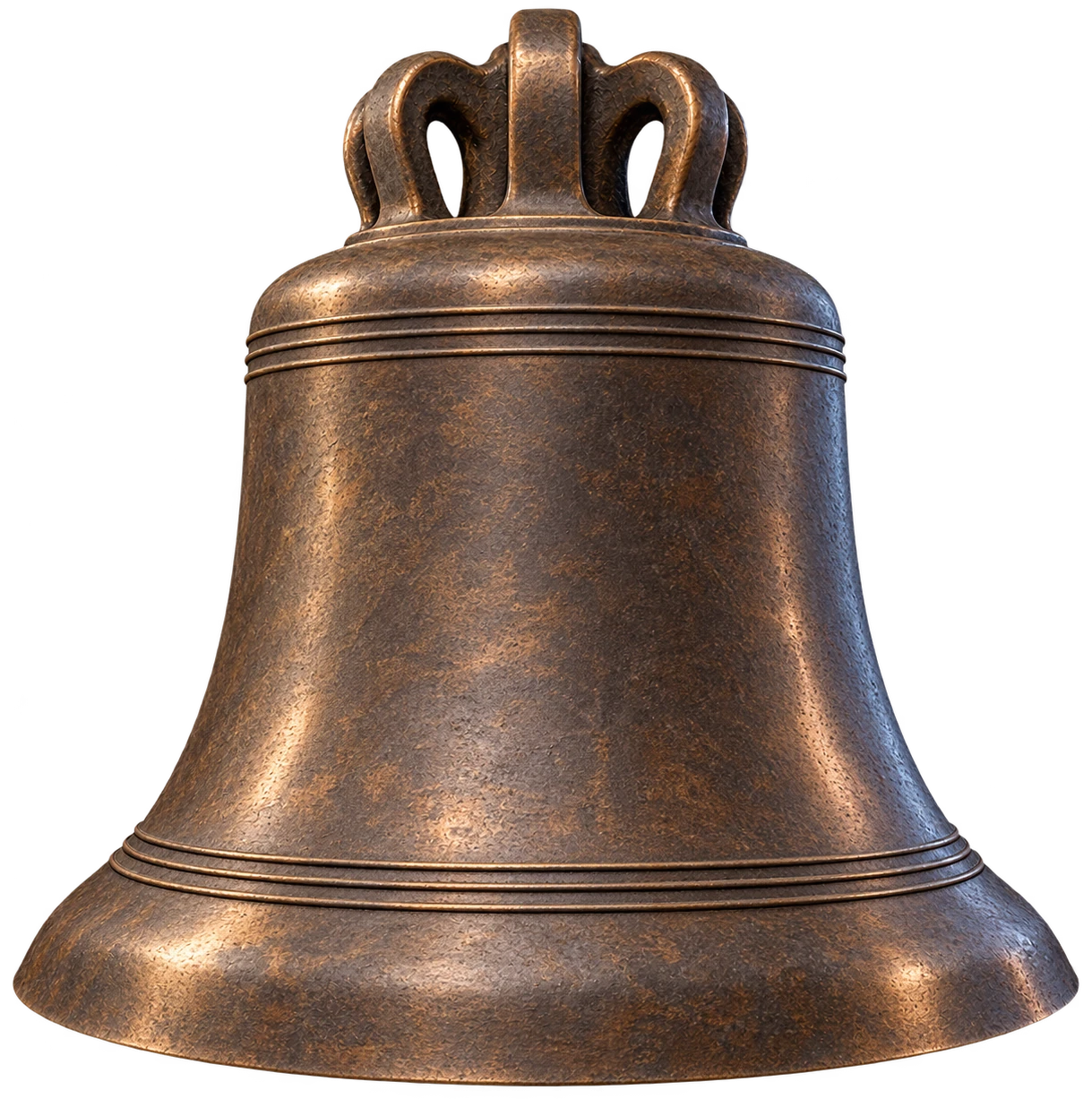 01Tower bells
3 cwt to 4 tons · rings of five to twelve9 months
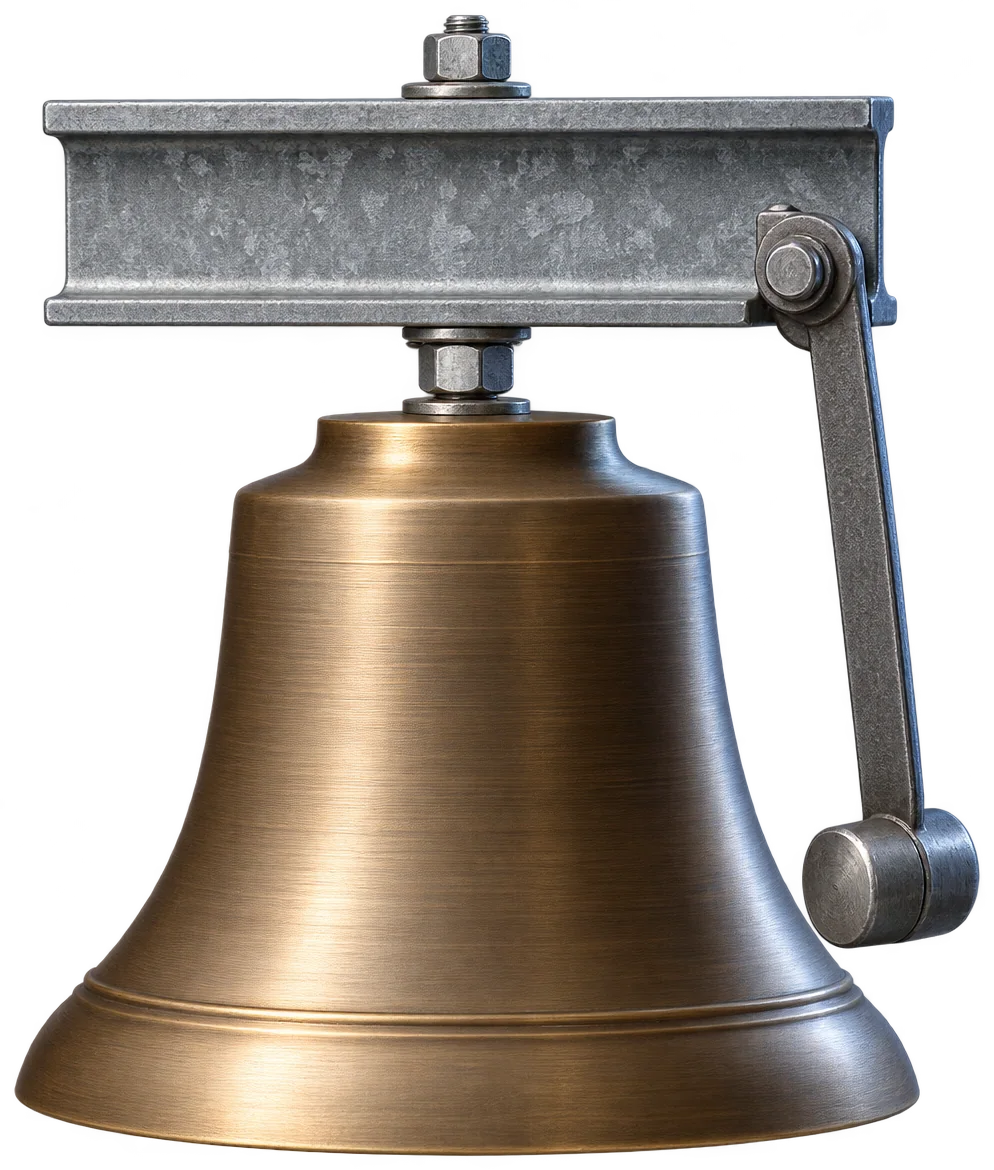 02Carillons & chimes
8 kg to 6 tons · up to 4½ octaves14 months
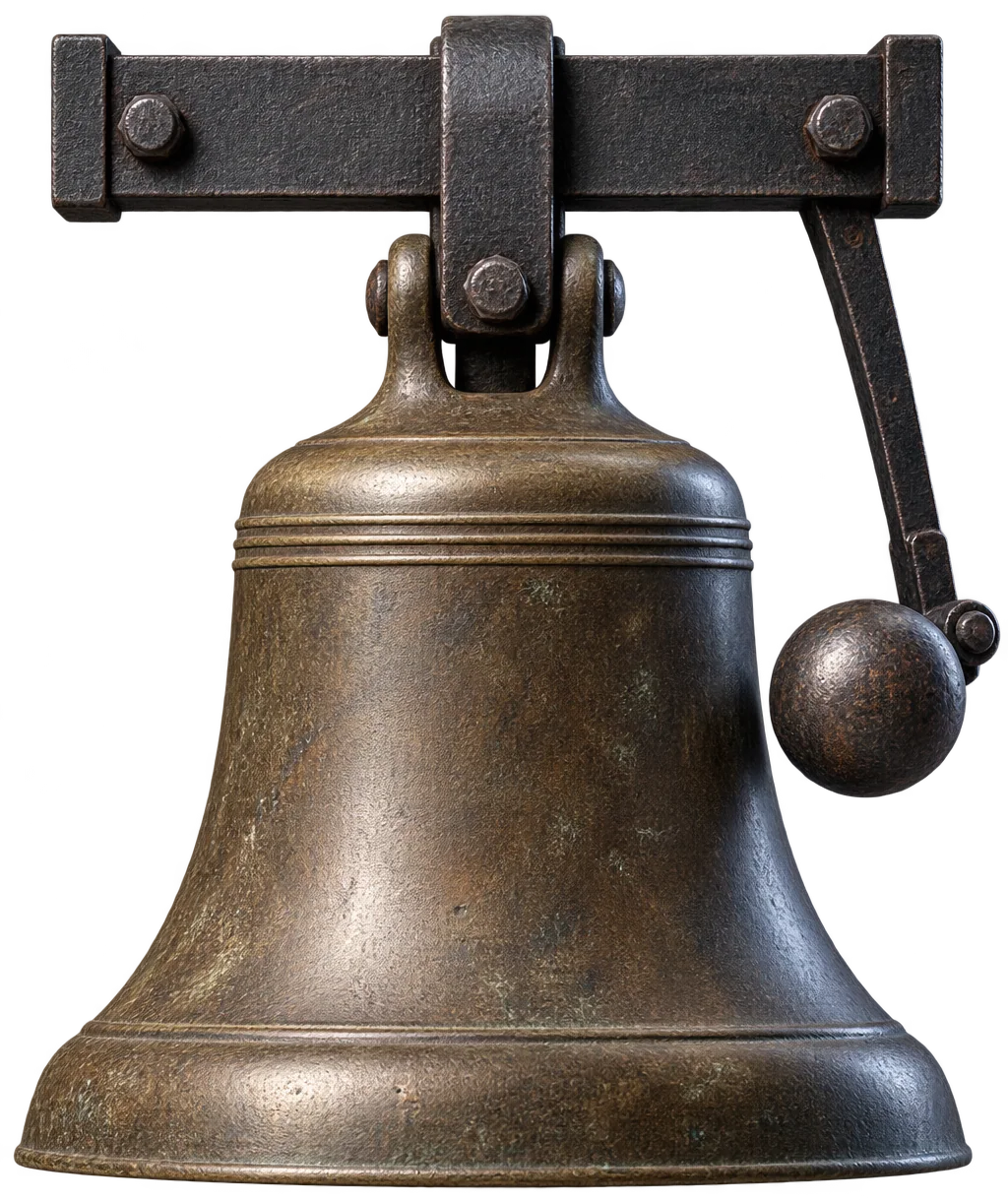 03Hour & quarter bells
For turret clocks · hung dead, struck true7 months
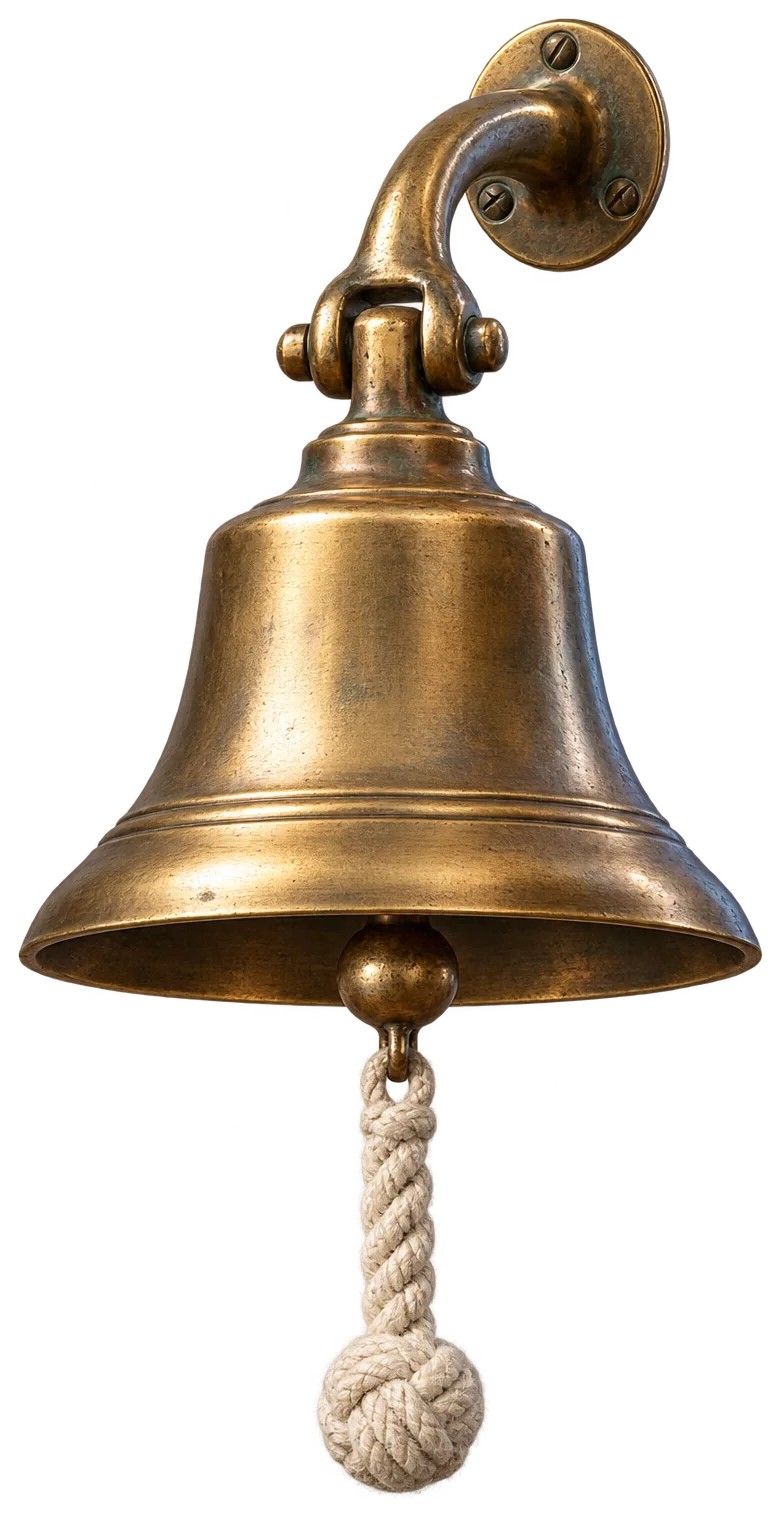 04Ship’s bells
6 to 14 inch · sea bronze10 weeks
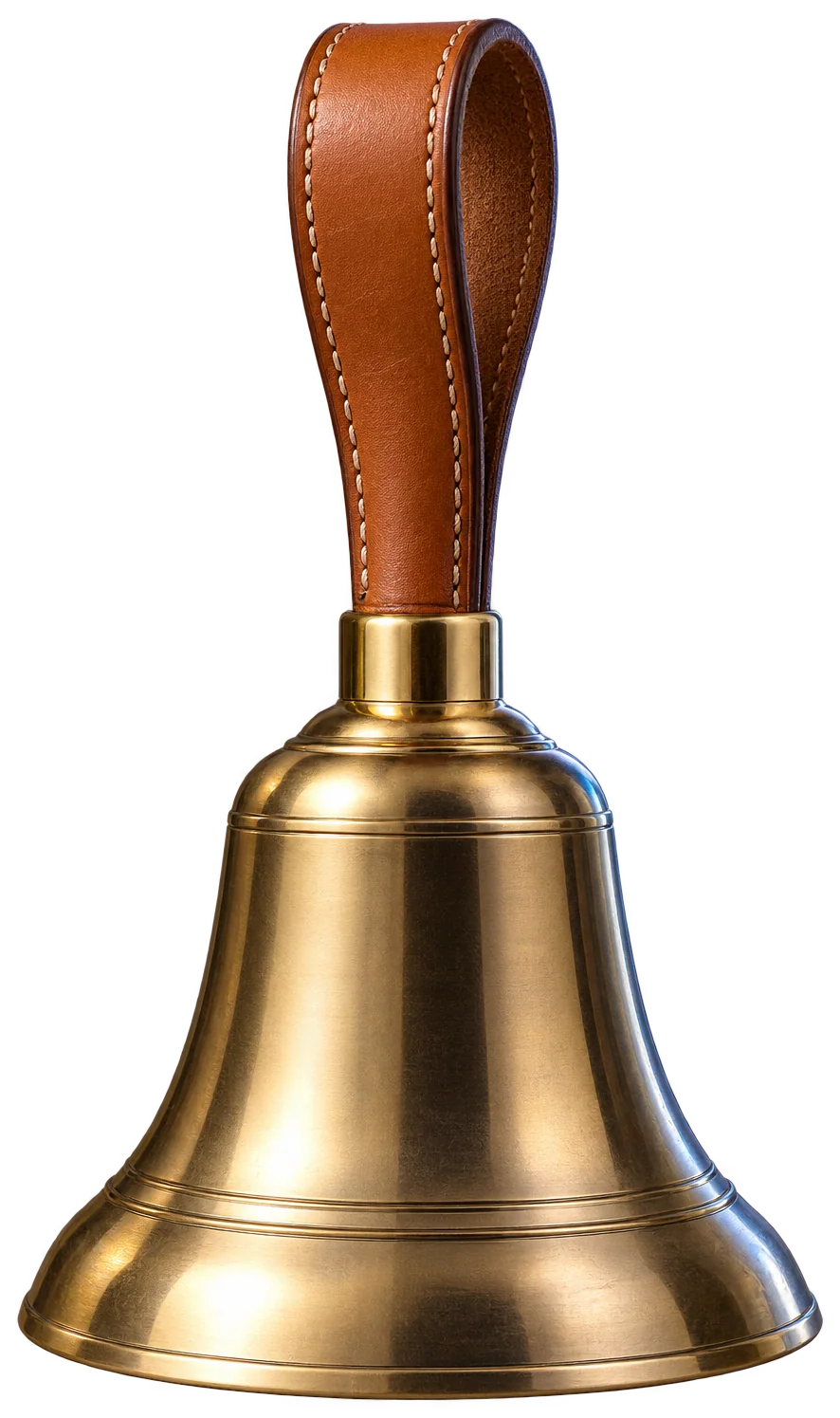 05Handbells
Sets of 2 to 5 octaves · leather by us5 months
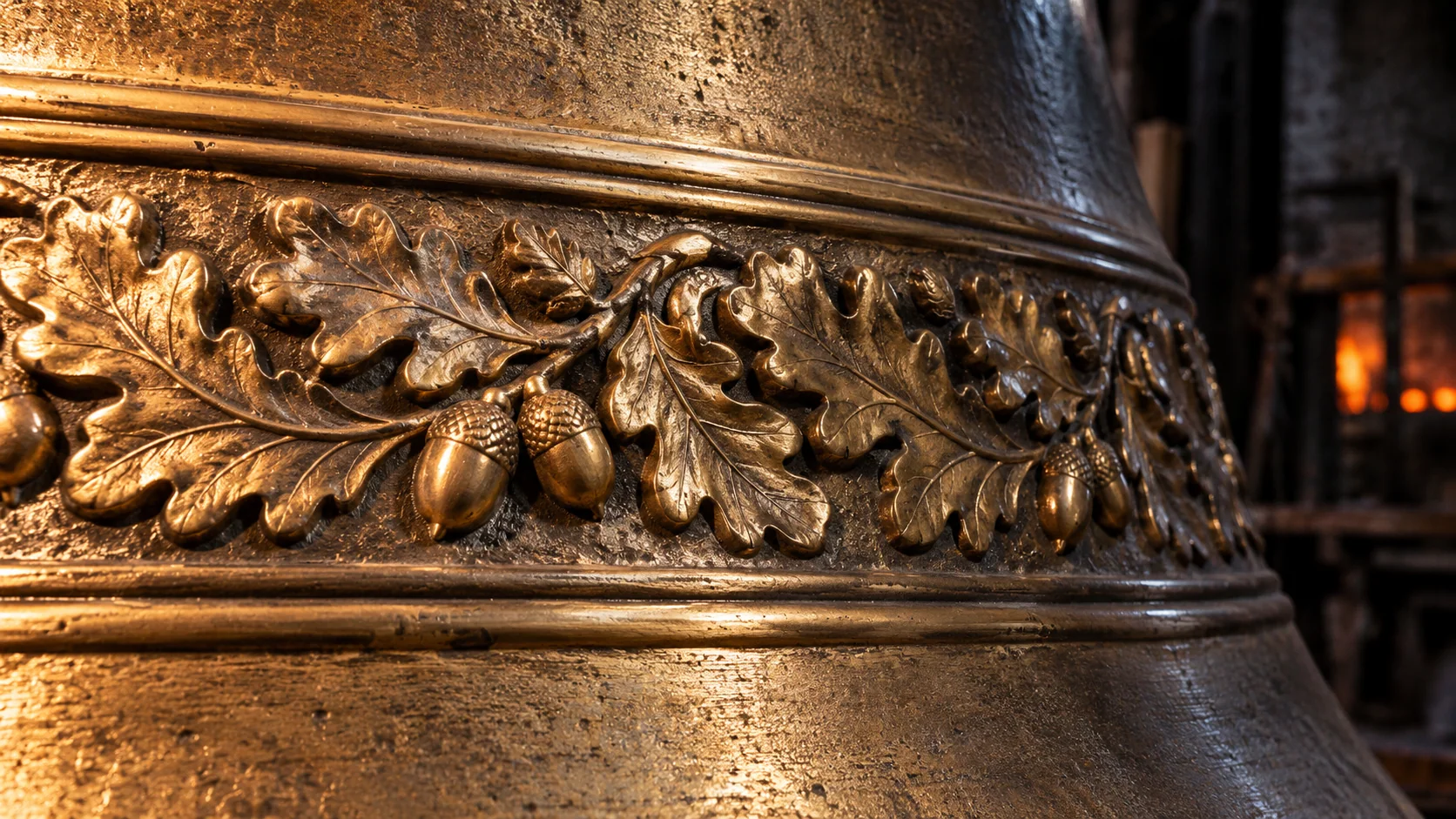
VICommission
Every bell we cast carries a line of lettering, set by hand in wax and cast into the metal. People agonise over it. Our advice: write what you would say out loud, then cross out half.